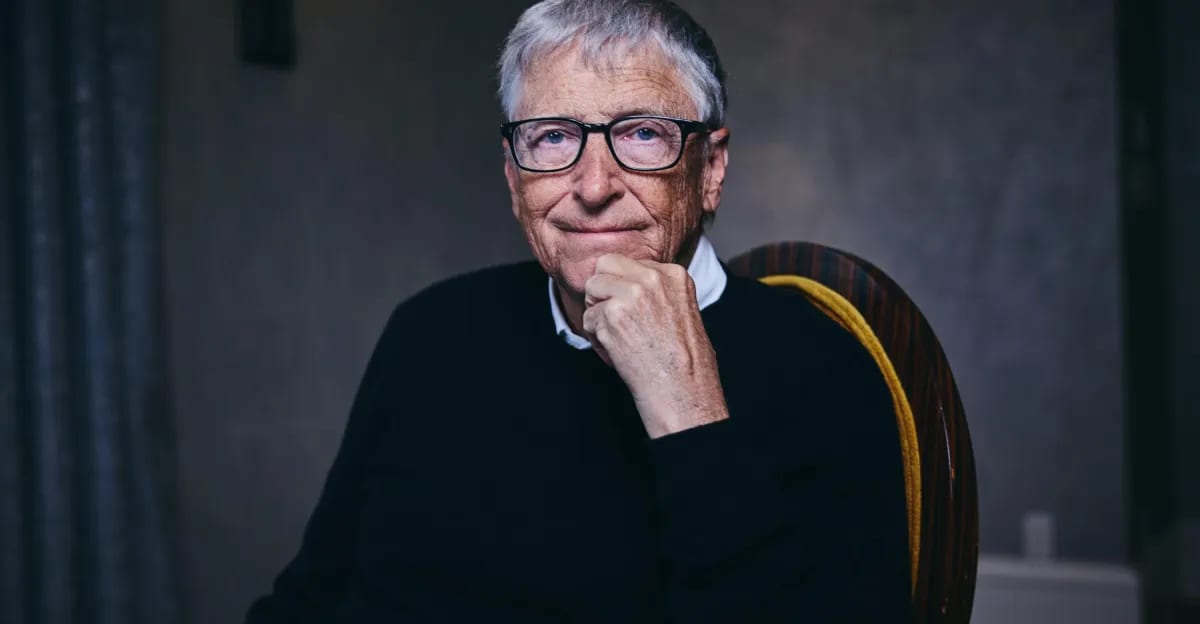
Bill Gates, the Microsoft cofounder, is telling people to get ready for roughly two decades of bumpy change from artificial intelligence. In an interview with The Verge's Decoder podcast, published October 22, he said the period could be painful enough to split society in two.
What Gates said
In late August, Gates published an essay titled "The turbulent AI era is here. The choices we make now are critical." He wrote that "even under the best circumstances, the transition to this new AI era will be one of the most turbulent times in human history." In later interviews he called AI "the most dangerous thing that humans have ever gone near."
He has not turned against the technology. He agreed with his earlier view that AI is beneficial and needs to be shaped the right way. His point is that the time to shape it is now, and that the response so far has not kept pace with the speed of the change.
The risk he worries about most
Gates said the biggest near-term danger is AI models with the safety limits removed. Some models are monitored so that cyberattackers and bioterrorists cannot use them to do gigantic harm. Models without those safeguards are a different and much riskier case, he said.
He also listed what has moved fast in the past year: writing code and finding cyber flaws, reasoning about biology, forming relationships with kids and other people, and disrupting the job market.
Who it affects
The Verge says Gates sees a possible split between people who are comfortable living near the technological frontier and people who reject it. The conversation also covered jobs and the nihilism some younger people feel toward technological progress. The Verge adds that he does not think the White House response, or the lack of coordination in the AI industry, is enough.
What to do
- Try AI tools now, so they are familiar rather than a surprise.
- Ask how the tasks in your own job or business could shift.
- Treat jobs, online safety and family life as areas where AI will keep changing things.
What is not known yet
The available text of the interview cuts off early. It does not show what specific rules or technical fixes Gates wants. The host asked how a safety solution could be enforced for open-source models, but the answer is not in the excerpt. The two-decade window is a rough estimate, not a dated forecast.
The takeawayGates expects about 20 years of AI upheaval, so learning the tools and watching how your work could change is a sensible start.