President Trump has declared imports of industrial robots a national security risk. In a proclamation issued October 28, he ordered talks with trading partners on foreign-made robots, industrial machinery and their parts. If those talks fail, tariffs or other limits could follow.
What changed
The proclamation says industrial robots are crucial for making US military weapons and are a driving force behind critical infrastructure. It cites a Commerce Department investigation under Secretary Howard Lutnick. That review reportedly found security and safety risks, including cybersecurity weaknesses that could have severe consequences.
The US and its trading partners have 180 days to reach agreements. If none are reached, the president may impose tariffs, duties, quotas and fees on these imports.
Who it affects
The biggest exposure is large manufacturers that rely on robots. The article names General Motors, Ford, Tesla, Boeing and Lockheed Martin. Any tariff would be paid by the US companies that import the robots, which would likely raise their cost of making things.
The US is the second largest market for industrial robots. The International Federation of Robotics reports nearly 38,500 new installations here in 2025.
Why there is no easy swap
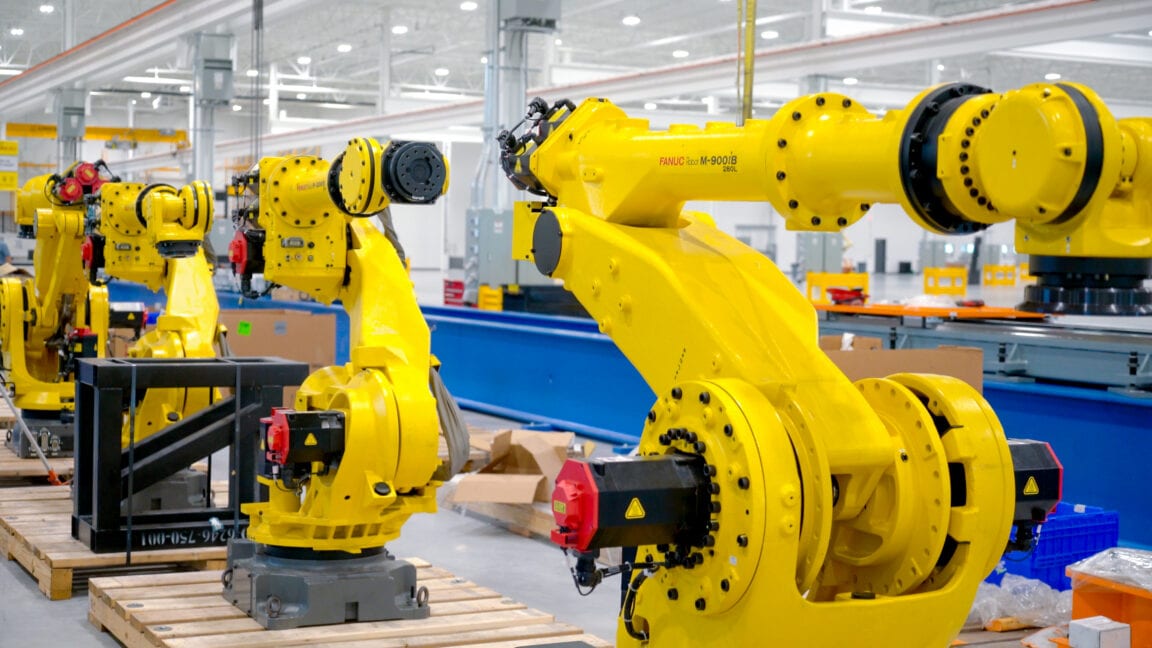
Big robotic arms mostly come from four makers: FANUC, ABB, Yaskawa and KUKA. They are based in Japan, Switzerland and Germany. No US company sells comparable heavy-duty arms, though the foreign makers have been expanding their US engineering and assembly sites. The proclamation itself admits US robot makers do not produce enough to meet national security needs.
Even Amazon, which builds many of its own robots, still uses some FANUC arms.
What happens next
This is separate from a July 2026 FCC ban on new models of foreign-made robots such as robot vacuums, robot dogs and humanoid robots. That ban exempted industrial arms and other stationary robots. The new action is aimed squarely at them.
Nothing is final. Tariffs are only a possibility, and no rates have been announced. The article also notes that big companies can win waivers, as Intel recently did under a separate robot ban. Businesses that buy factory equipment may want to ask suppliers now about pricing and delivery over the next year.
The takeawayTariffs on foreign factory robots are possible after 180 days of talks, so businesses that buy equipment should watch for price and supply changes.