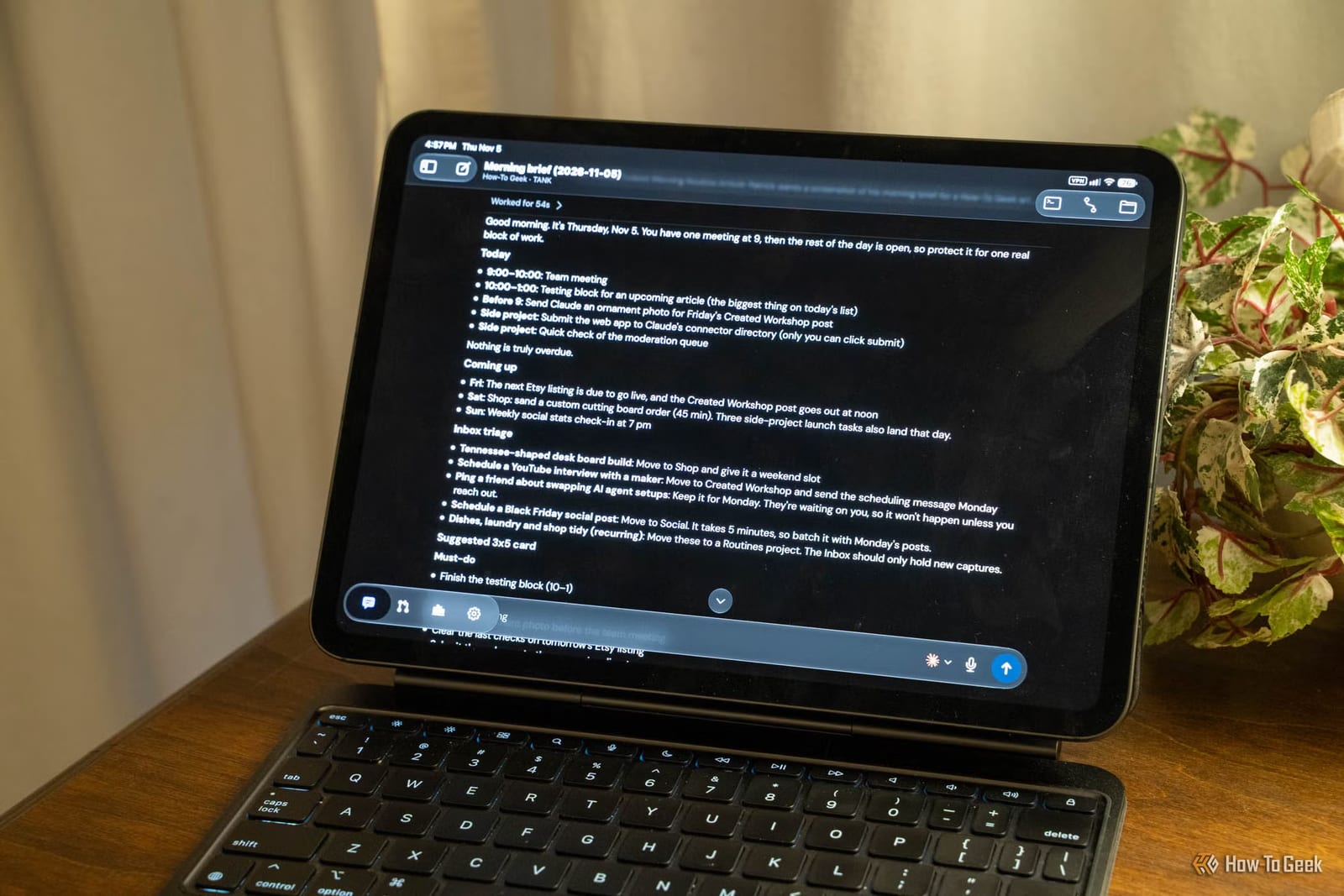
A writer who kept forgetting to open his to-do app now has an AI assistant bring the list to him. Patrick Campanale of How-To Geek set up Claude to send a daily brief every weekday morning, built from his Todoist tasks, calendar, writing folders and email.
What the brief does
Campanale has used Todoist for more than a decade. His problem was never adding tasks. It was remembering to look at them again. Overdue items piled up, the number grew, and the list felt too big to open. He says ADHD makes that worse.
- It lists what is overdue and what is due today.
- It gives a quick look at the next three days.
- It scans the whole list for items that could creep up on him or that never got a date.
He also describes calendar appointments and emails that need attention as part of the morning brief. It arrives as a new message thread before he gets to his desk.
Read only, and it asks first
Claude can see his writing folders in Obsidian, a note app that stores files on his computer. It can tell whether a piece sits in an "In Progress" folder or a "Published" folder. It also has read-only access to his email. He says he does not trust AI enough to let it change email.
That lets Claude spot tasks that look finished. If an article is marked published, or an email was already answered, it asks whether to complete the task. It does not do it on its own. He says he may allow that later.
It can also suggest new tasks. In one example, he replied to a partner on his maker YouTube channel. Claude suggested a follow-up task for a week later in case no answer came. He then tells it to create the task or ignore it.
A paper option
Campanale also designed a small wooden tray for 3x5 task cards. When he is using it, Claude sorts his list into one must-do, two to four should-dos and a few easy wins. He says he sometimes disagrees with the picks, and a quick chat settles it.
Why it matters
He juggles writing, a small business, several social media channels and IT work for his church. He says he cannot afford a human virtual assistant, so this is the next best thing. The idea fits anyone who forgets to check a task list: the list comes to you, and the AI only looks.
What is not clear
The excerpt does not include the exact prompt, so the full setup steps are not available here. It also says the setup has changed over several months, so it was not built in one sitting.
The takeawayIf you forget to check your task list, a read-only AI helper that asks before changing anything can bring the list to you each morning.