Researchers in Japan have built a small sensor that plugs into a smartphone and can detect "forever chemicals" in water. The team at the Okinawa Institute of Science and Technology (OIST) says it could one day move this kind of testing out of expensive labs. For now, it is an experimental prototype.
What changed
The device detects two PFAS chemicals, PFOA and PFOS, at levels as low as 1.11 and 1.63 parts per trillion. That is an extremely small amount. The work was published in the journal Biosensors and Bioelectronics.
The team also made the sensors cheap to produce. They screen-printed 100 disposable electrodes onto repurposed fabric in just a few hours.
How it works
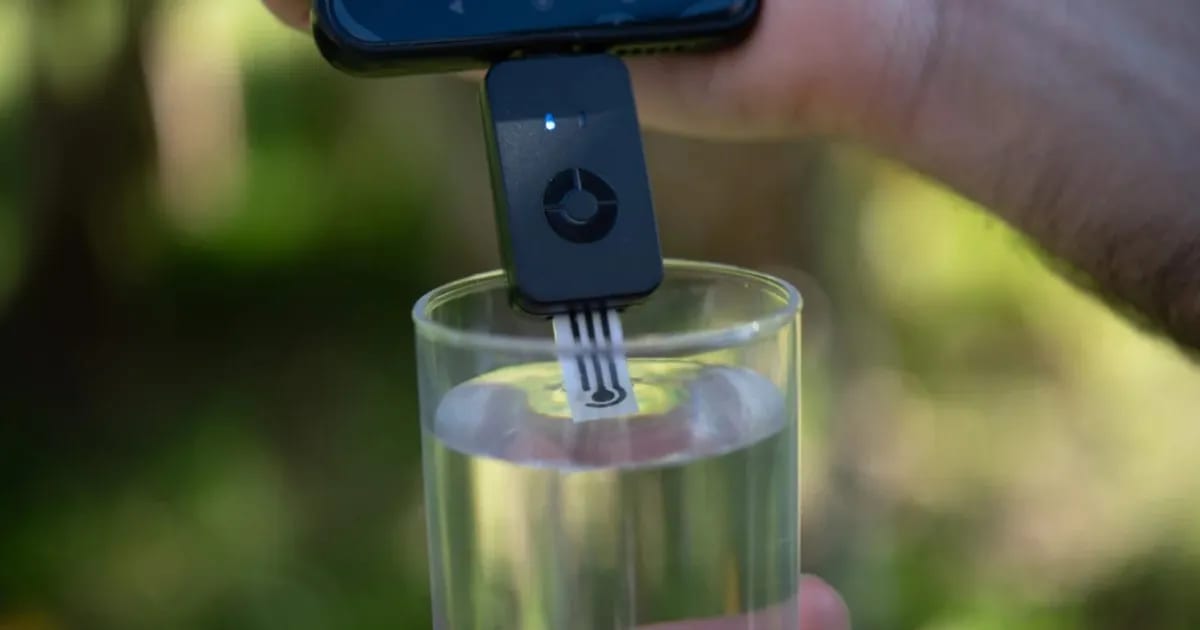
The sensor uses specially engineered materials called molecularly imprinted polymers. They act like synthetic antibodies, built to recognize one specific type of molecule. When PFAS particles stick to the sensor's surface, the electrical current passing through it changes. Measuring that change shows how much of the chemical is in the water.
Each electrode connects to a small measuring device called a potentiostat. That device plugs into a smartphone or laptop.
In tests, drinking water and freshwater samples were deliberately contaminated with these chemicals. The sensors achieved recovery rates between 88% and 96%, meaning they picked up most of what had been added.
Why it matters
PFAS are hard to get rid of because they resist natural breakdown. They show up in nonstick cookware, food packaging and firefighting foams, and they build up in the environment. Exposure to certain PFAS has been linked to higher risks of some cancers, immune system problems and developmental complications.
Testing today usually needs specialized lab equipment, which makes routine checks costly and inconvenient. The OIST approach could eventually let environmental agencies, and even households, spot contamination without mailing samples away. The sensors can also be modified to recognize other PFAS compounds, though only two have been shown so far.
What is not known yet
The researchers say more development and real-world field testing are needed before the technology is widely available. The material does not give a release date or a price.
- It is a prototype, not a product.
- Only PFOA and PFOS have been demonstrated.
- If you worry about your water, a lab test is still the way to go.
The takeawayA phone-linked PFAS water sensor is promising but still a prototype, so a lab test remains the option if you worry about your water.