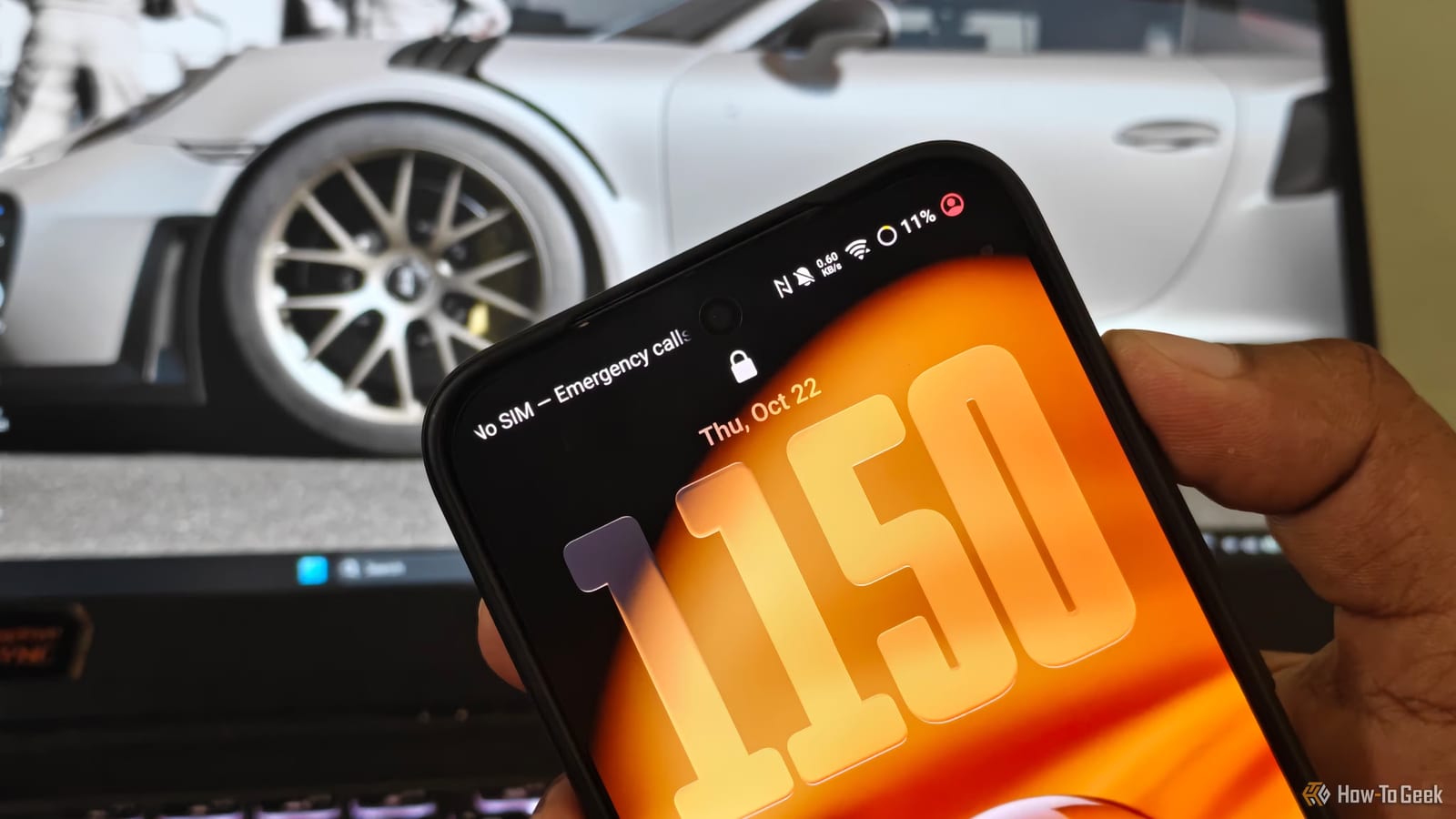
The first Android phone, released in October 2008, had a 1,150 mAh battery. Many phones today carry 5,000 mAh, nearly five times as much. Yet most people still charge every night. A How-To Geek writer argues that the bigger battery is not the problem. How the phone is used, and what runs behind the scenes, is.
Why a bigger battery is not enough
The article points to Jevons' paradox. In plain terms, when something gets more efficient, people tend to use more of it, and the savings disappear. The 2008 phone was a side tool for texts, calls and basic web pages. Today's phone handles TV, payments and maps. Users now log more than five hours of screen time a day and unlock their phones more than 100 times.
Screens and background apps
Modern screens are large, run at 120Hz and can pass 1,000 nits of brightness. Some panels can slow down to 1Hz to save power, but that matters little if you keep touching the phone. A 2026 study of university students found an average of 6.1 hours of daily phone use.
Apps add to the drain even when the screen is off. Food delivery, rideshare and shopping apps check your location for live tracking and local offers. Messaging and social apps keep connections open for notifications. Each wake-up pulls the processor out of rest. Together, the article says, this can quietly use 15 to 25 percent of your battery.
The 5G factor
Under certain conditions, 5G can use more power than 4G LTE. In areas where 5G coverage comes and goes, the phone's modem raises its transmit power to find and hold a stable signal. That can create extra heat and drain the battery even while the phone sits in a pocket.
What to do
The article says a few software settings can meaningfully cut background power draw. The list of those settings is not included in the material available, so specific steps are not covered here. The drains it names are a useful place to start:
- Apps that track your location, such as delivery, rideshare and shopping apps
- Messaging, productivity and social apps that stay connected all day
- Time spent in areas with weak or shifting 5G coverage
What happens next
Silicon-carbon batteries can push capacity past 6,000 mAh without adding weight. Samsung and other makers are slowly adopting them. The author doubts this will end nightly charging. History suggests the extra room could be used up by brighter displays, heavier software, richer animations and AI tasks that run on the phone.
The takeawayBigger batteries have not ended nightly charging, so cutting background app activity is the easiest way to get hours back.