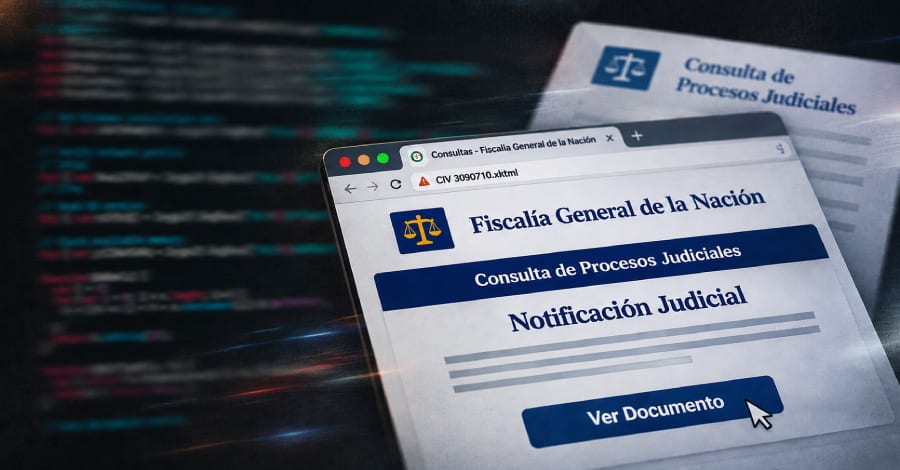
Act this weekWhat happenedThe Blind Eagle hacking group is sending fake judicial and administrative notices that install a remote access trojan, a program that gives attackers control of a computer.
Who is affectedOrganizations in Latin America, especially staff who handle emails in Portuguese or Spanish, such as legal, finance and administration teams.
What to do- 1Do not open attachments or links in unexpected court or government notices.
- 2Verify the notice by contacting the agency using a phone number or website you already trust.
- 3Tell your staff what these fake notices look like, especially those who read email in Spanish or Portuguese.
- 4Keep security software and system updates turned on, and report suspicious emails to your IT contact.
A hacking group known as Blind Eagle is back. Its new campaign sends emails that look like court or government notices to organizations in Latin America. Open the wrong one, and a hidden program can give the attackers remote control of your computer.
What happened
The emails are written in Portuguese and Spanish and are styled as judicial and administrative notices. The goal is to get someone to open them. The hidden program is called a remote access trojan, or RAT. It lets an outsider operate a computer from far away. Security researchers say this one shares its lineage with two known tools, AsyncRAT and DCRat.
Who it affects
The targets are organizations in Latin America. Staff who read email in Spanish or Portuguese are the likeliest to see these lures, especially in legal, finance and administration roles. Any business with employees or partners in the region should take note. A legal notice creates pressure to act fast, which is exactly what the attackers count on.
Who can relax
Households and companies with no ties to Latin America are not the stated targets of this campaign. Still, fake official notices are a common trick, so the habit of doubting them is worth keeping.
What to do
The alert box above lists the steps. The core idea is simple: do not trust an unexpected legal notice, and confirm it through a channel you already know is real.
What is not known yet
The material available does not say how many organizations were hit, which countries saw the most attacks, or what the attackers did after gaining access. It also does not say how the notices reach inboxes beyond the emails themselves. More detail may emerge as researchers keep tracking the group.
The takeawayTreat any unexpected court or government notice as a possible trap, and confirm it through a phone number or website you already trust.