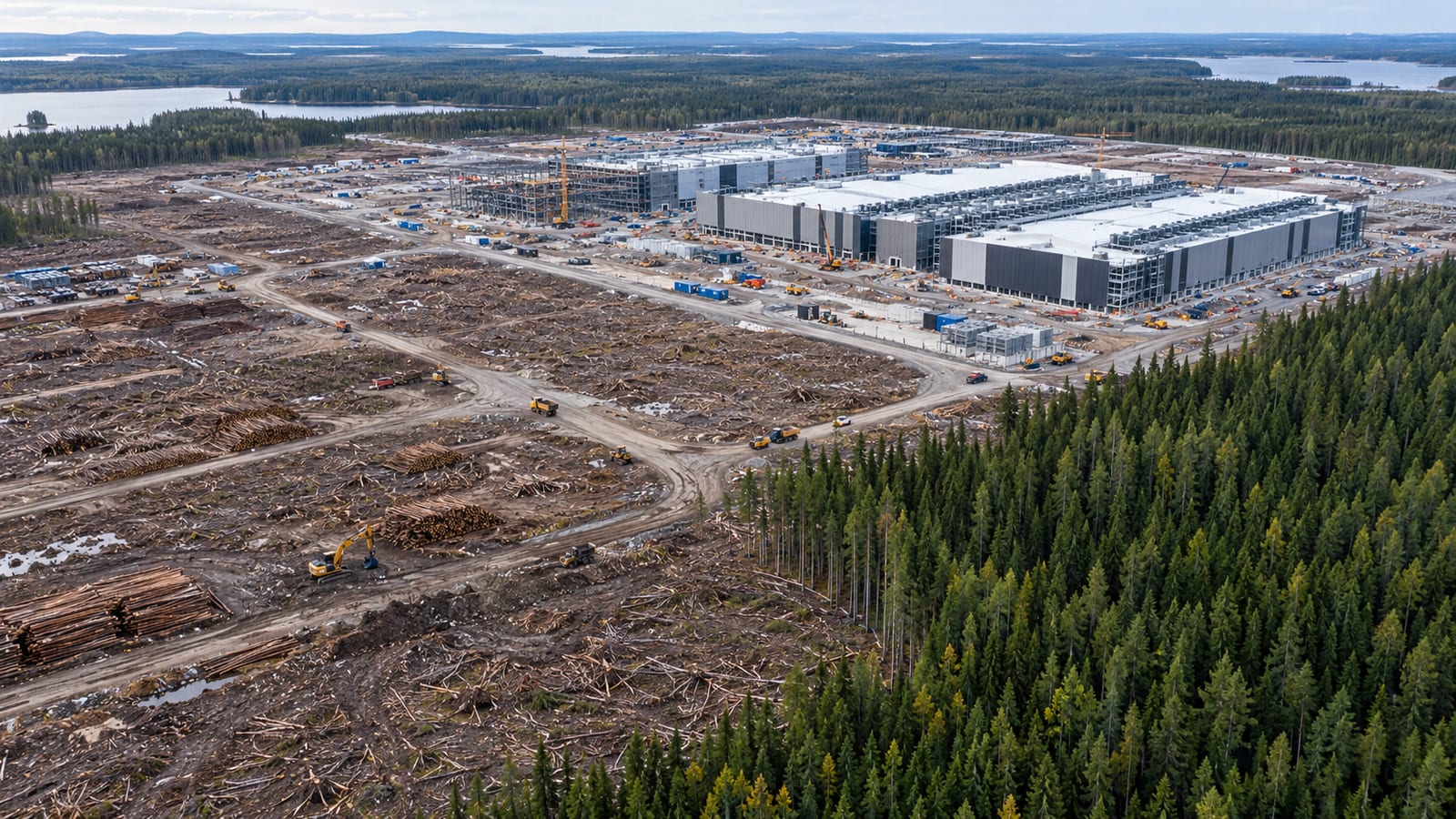
Google cleared about 250,000 trees in Finland to build AI data centers, and then its Finland country manager apologized. The Guardian published an investigation on Thursday. Finnish authorities have since ordered work to stop at planned sites until environmental reviews are finished.
What happened
The main site is in Muhos, where Google cleared roughly 330 hectares of forest. That is more than 450 American football fields. Environmental experts estimate another 150,000 trees were removed at a second site in Otanmäki. That brings the estimated total to about 400,000.
The work went beyond cutting trees. Workers also removed topsoil, built roads and changed drainage systems. Residents told The Guardian they worry about muddy runoff reaching waterways connected to the Oulujoki River.
The pause and the apology
Finland's national broadcaster Yle reports that authorities ordered Google's subsidiary, Tuike Finland, to stop environmentally significant work at planned data centers in Muhos and Kajaani. The pause lasts until mandatory environmental impact assessments are completed.
Google first said its forestry work followed Finnish law. Antti Järvinen, the company's Finland country manager, later apologized for the clearings. He said Google believed it was operating within the rules. Google also plans to plant trees across 130 hectares in Muhos as part of its biodiversity efforts.
Why it matters to you
Tools like Gemini and ChatGPT run in huge data centers packed with powerful processors. Those buildings need land, electricity, cooling and supporting infrastructure. The project is part of a 13 billion euro plan that Google announced in September and called its largest single investment in Europe.
Finland appeals to tech companies for its cool climate, available land and energy resources. Cooler air can cut the electricity needed to keep servers from overheating. But that does not erase the impact of building. Forests absorb carbon dioxide, support wildlife and help regulate local ecosystems.
Who gains and who pays
New data centers can bring construction jobs, tax revenue and investment. Nearby residents may also face disruption and worry about future electricity costs. Google is not alone in building at this scale, and rising demand for computing power means more projects are likely.
What happens next
The environmental reviews will decide when work can resume at Muhos and Kajaani. The material does not say how long they will take. It also does not say whether the sites will change. Replacing mature trees is not as simple as planting new ones.
The takeawayThe real cost of AI tools includes the land and local communities around the data centers that run them, and regulators are starting to push back.