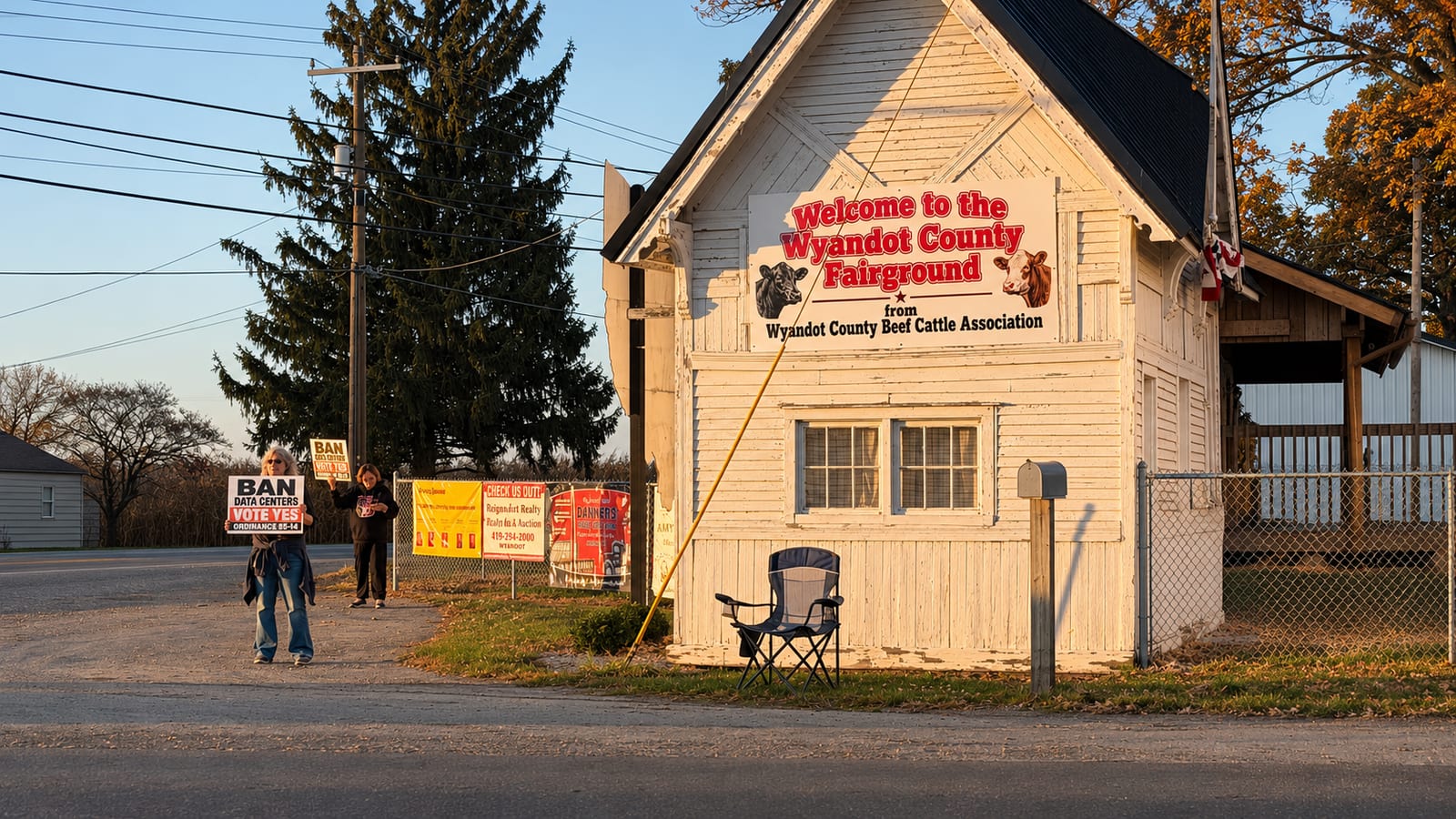
Voters in Upper Sandusky, Ohio, have approved a ban on large data centers inside city limits. Nearly 77% voted yes on November 3. The vote followed months of pushback against a proposed $900 million data center and natural gas power plant.
What the ban covers
The measure bars construction of data centers with an electrical demand, or peak load, above 25 megawatts. A megawatt is a unit of electric power. The rule is a charter amendment, which means it changes the city's founding rules rather than a single zoning decision.
What was proposed
In June, Smartland Energy proposed building on about 146 acres near the northern edge of the city. The plan included data centers and a 150-megawatt natural gas power plant. Residents asked about water supply, electricity bills and whether the city's industrial zoning rules fit a project this size. The town was also already weighing infrastructure questions tied to a new soybean processing plant.
How residents organized
It started when a resident shared a local newspaper story about the plan in a community Facebook group. Hundreds of people shared it. A dedicated group grew to about 700 members. Angela Huffman, a local farmer's daughter and president of the nonprofit Farm Action, helped organize. Residents went to public meetings, requested government records and pressed officials for answers.
Smartland Energy withdrew its zoning request, but kept trying to win local support, including with an information event at a church. Withdrawing did not mean the project was gone for good, so residents kept going. On July 6, the city council unanimously approved a six-month pause on data centers and related power plants. Residents had asked for 12 months.
The signature scare
To reach the ballot, organizers needed enough valid signatures from registered city voters. They were first told they needed 155. They turned in 301 on August 3, but officials accepted only 192. The city charter actually required 212.
With hours left before the deadline, volunteers went back out. On August 5 they submitted 50 more. Officials accepted 37, which brought the total to 229, enough to qualify.
What other towns can take from it
- Get a lawyer early. Huffman says theirs worked pro bono, and a paid legal review is worth it if not.
- Confirm the exact signature requirement, and collect well beyond it.
- Use public meetings and records requests to get answers before officials decide.
- Expect a pause to be temporary and plan the longer-term step.
What is not clear
The material does not say whether Smartland Energy will try again elsewhere or challenge the rule. Huffman also said many neighbors were uneasy about speaking publicly, a reminder that this kind of campaign can strain relationships in a small town.
The takeawayIf a data center is proposed near you, raise questions about power and water early, and check whether local rules let residents put the issue to a vote.