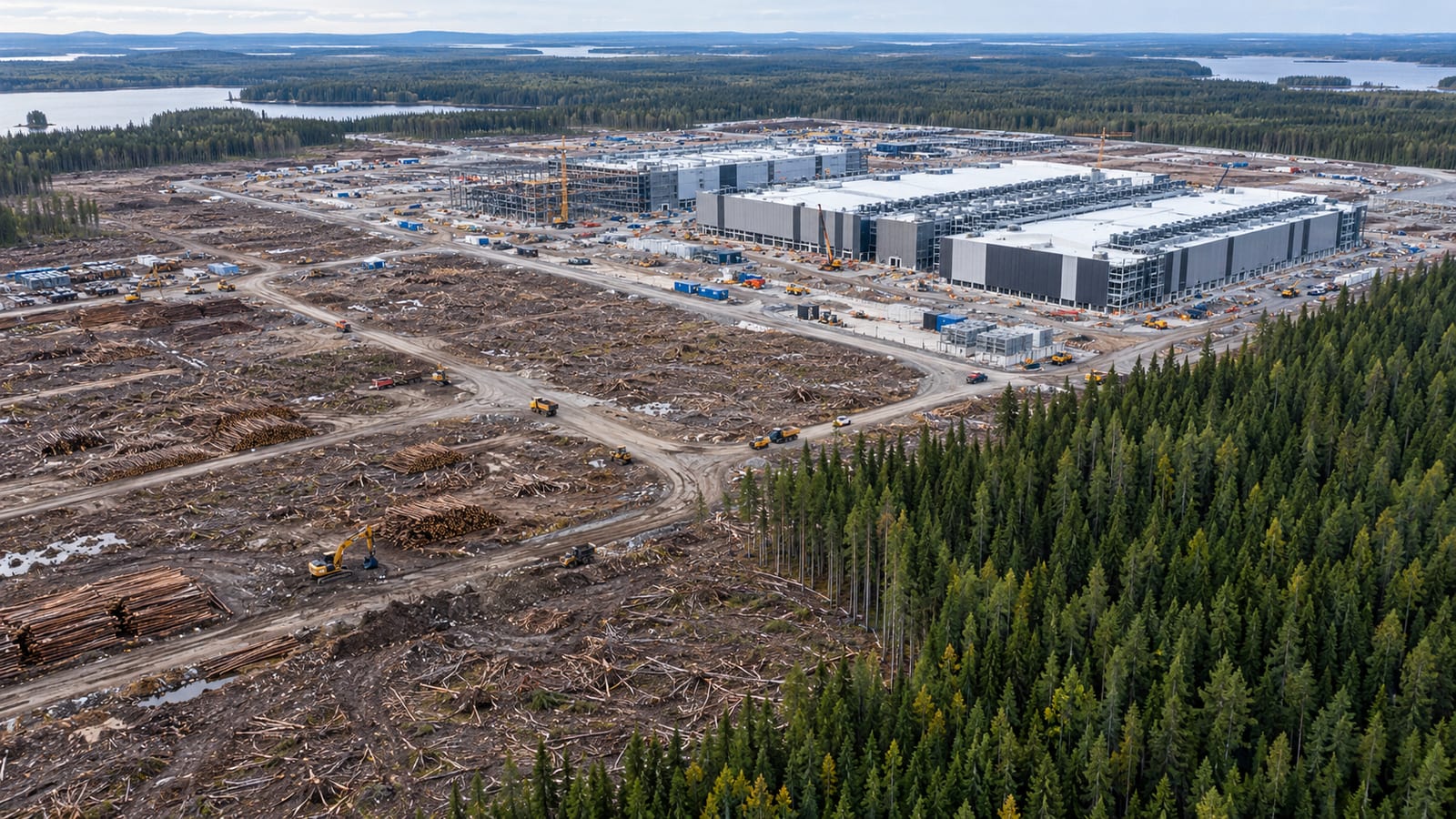
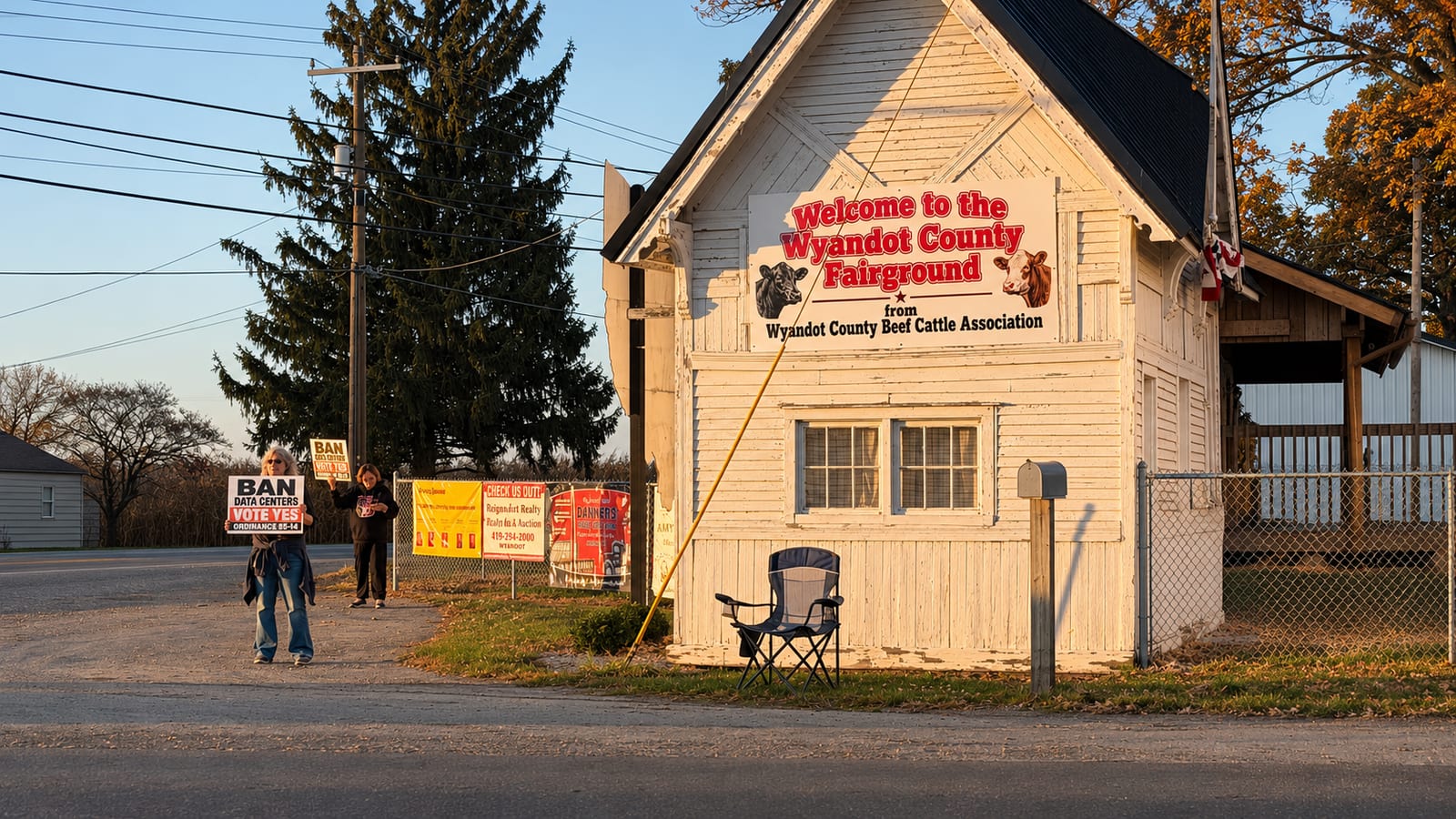
You do not need to live near an AI data center, or use AI at all, to help pay for one. When these huge facilities plug into the power grid, the cost of the new power equipment can be spread across everyone who pays an electric bill in the region.
How the cost reaches you
Data centers used about 4.4% of all US electricity in 2023. That was up from 58 terawatt-hours in 2014 to 176 in 2023. The Department of Energy's Lawrence Berkeley National Laboratory projects the share could reach 6.7% to 12% by 2028.
To keep up, utilities may need new power plants, substations and transmission lines. Those projects cost billions. Depending on local rules, some of that can be passed to households and other businesses, as Harvard's Ari Peskoe explained to NPR.
What the numbers show
PJM Interconnection runs the grid for 67 million people across 13 states and Washington, D.C. It holds auctions to make sure enough power is available when demand peaks. According to Reuters, auction prices rose roughly 1,000% in two years. They hit a record $333.44 per megawatt-day in December 2025. The July 2026 auction came in slightly lower, at $325.
- PJM estimated rising capacity costs alone could add 1.5% to 5% to some household bills.
- Consulting firm ICF warned residential rates in the region could climb 30% to 60% by 2030.
- PJM's independent market monitor said data center demand added $29.4 billion to costs across four auctions.
That $29.4 billion was not added directly to home bills. It does show how expensive the AI boom is for the grid. In Maryland, households are estimated to pay an extra $168 to $216 a year, mostly because of data center demand. A 2026 university study projected wholesale electricity prices could rise 6% to 29% nationally by 2030, and up to 57% in some regions.
What states and companies are doing
Ohio approved rules in July 2025 requiring large data centers to pay for most of the capacity they reserve, even if they do not use it all. New Jersey passed a law in June 2026 making large data centers pay for the infrastructure they need. Wisconsin regulators ruled that existing customers should not help cover the cost of new data centers. Virginia has considered an approach like Ohio's.
Tech companies are making promises too. Several have signed a federal pledge to cover their own power needs. Anthropic, the company behind Claude, has said it will cover any price increases caused by its data centers. Consumer advocates are skeptical that these pledges will be kept.
How to have a say
Most major data center projects go through a state public utility commission, which decides who pays for the power and infrastructure. The public can comment, and those comments become part of the official record. Residents of Wisconsin and Kentucky have already filed thousands about proposed data center rates.
Public opinion is moving. A Consumer Reports survey of more than 2,000 adults, released in October 2026, found 84% would support a separate rate category for large users like data centers. A Gallup survey found seven in 10 Americans oppose building AI data centers in their area.
The takeawayIf a data center is planned near you, your state utility commission takes public comments before deciding who pays for the power it needs.