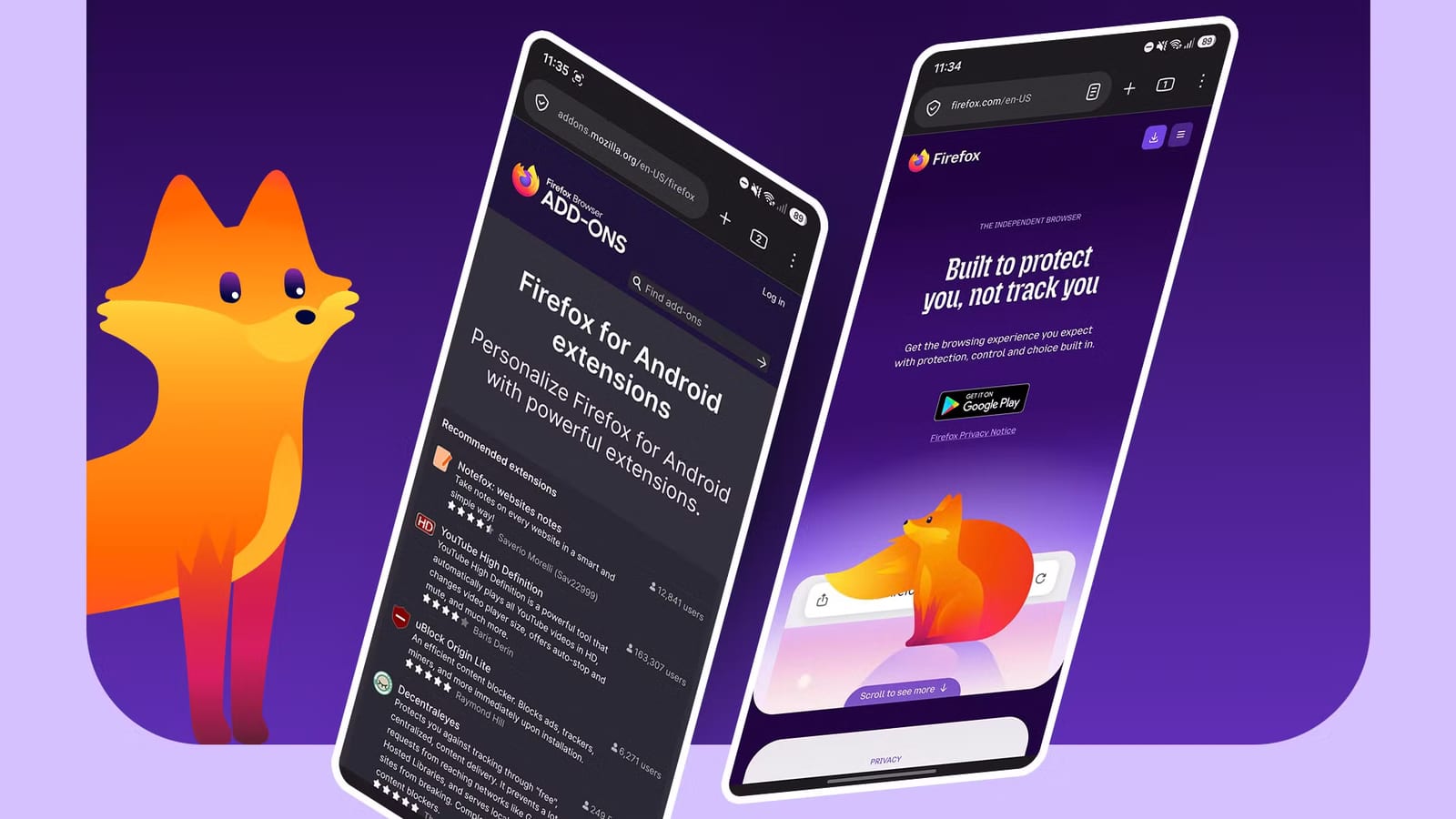
Android Police writer Jon Gilbert says he has switched from Chrome to Firefox on his Android phone, and one reason stands out. Firefox lets him add extensions, which are small add-ons that change how a browser works. Chrome on mobile does not. That means he can block ads in Firefox, and he cannot in Chrome.
Why extensions matter
Firefox for Android offers more than 13,000 extensions. The list includes ad blockers, dark mode viewers, text-to-speech tools and tracking removers. Chrome on mobile has none. Gilbert now uses Chrome on Android only to sync his history and bookmarks between devices. He says ads are everywhere in Chrome and he cannot block them on his phone.
Not every extension is missed. Grammarly and Bitwarden Password Manager, which he uses on desktop Chrome, have standalone Android apps. He says those work well with Chrome.
Security and privacy
Google recently announced new Chrome security features. It says they make users "ten times safer from phishing, social engineering, notification abuse, and other scams." Gilbert says security updates matter. He argues that Firefox extensions include security tools that are just as useful, though perhaps not as comprehensive. He also says many of Chrome's recent fixes address problems that can be solved by knowing the most common scams.
Firefox has a privacy catch. It raised eyebrows last year when it expanded its terms of service to allow it to claim user inputs. Gilbert says most of its theoretically invasive features are opt-in or opt-out. He also likes that Firefox lets users turn off all its AI features with simple switches.
Speed and what is missing
Chrome is a bit faster, according to Gilbert. He suspects many websites are built with Chromium browsers in mind. Chromium is the technology behind Chrome. He only noticed the gap in careful side-by-side testing and is not sure he would have noticed otherwise.
The other feature he wants is vertical tabs, where open tabs sit in a side list instead of across the top. He found them on Sideraven, a Firefox fork, meaning a separate browser built from Firefox. He says they free up screen space. Chrome already offers them on desktop.
What happens next
This is an opinion piece, not a test of every browser. Gilbert says he would drop Chrome completely if Firefox had vertical tabs. He says he would never look at Firefox again if Chrome added vertical tabs and extensions. The article does not say whether Google plans either change for Chrome on mobile.
The takeawayIf ads bother you on your phone, Firefox for Android lets you add an ad blocker, and Chrome on mobile does not.