People who walk fewer than 5,000 steps a day face about twice the risk of dementia, Parkinson's disease or stroke, compared with people who walk at least 12,000. That is the finding from new research presented at the 151st Annual Meeting of the American Neurological Association.
What the study found
Researchers looked at fitness wearable data from more than 22,000 users over a full year. They split people into groups by how active they were, then compared health records across the groups.
As activity fell, diagnoses of dementia, Parkinson's disease, stroke or transient ischemic attack (a brief stroke-like event) rose. The gap was 80% between the most active and least active groups.
- The least active group was more likely to have obesity, diabetes, high blood pressure and depression.
- People who walked 8,000 or 12,000 steps a day had lower BMI, a measure of body weight against height.
- Those groups also had lower rates of diabetes, high blood pressure and depression.
Do you need a smartwatch
No. Your phone already counts steps with a sensor inside it, and you do not have to hold it. Keeping it in a jeans pocket while you walk works fine.
One study in the journal Sensor tested six mobile apps against fitness bands. It found the phone apps were comparable to the wrist devices. Another study, from the University of Pennsylvania, had people walk on a treadmill while wearing several wearables. The phone apps came out more accurate than the fitness bands.
Wearables have improved since those studies were done. Phone apps are still a reliable way to count steps.
What to do
Check how many steps your phone logs on a normal day. That gives you a starting point, and it costs nothing.
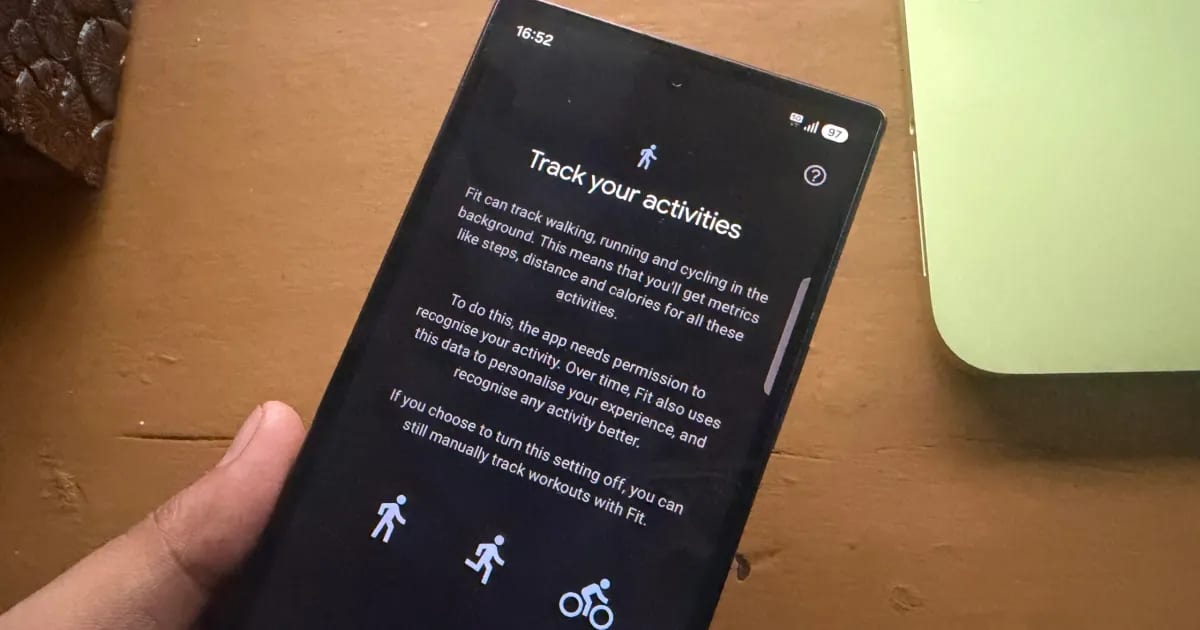
Google Fit can record steps using your phone's sensor. Google is retiring it soon and moving users to an app called Health Connect, so new downloads should go there. Third-party options include StepsApp Pedometer and Pacer Pedometer.
What is not clear
The material describes a link between low step counts and these conditions. It does not say that walking less causes them, and it does not say how many steps would lower any one person's risk. The people in the least active group also had more obesity, diabetes, high blood pressure and depression, which makes the picture more complicated. Anyone worried about their own health should talk to a doctor.
The takeawayYour phone can count steps from your pocket, so check your daily total and see whether you land under 5,000.