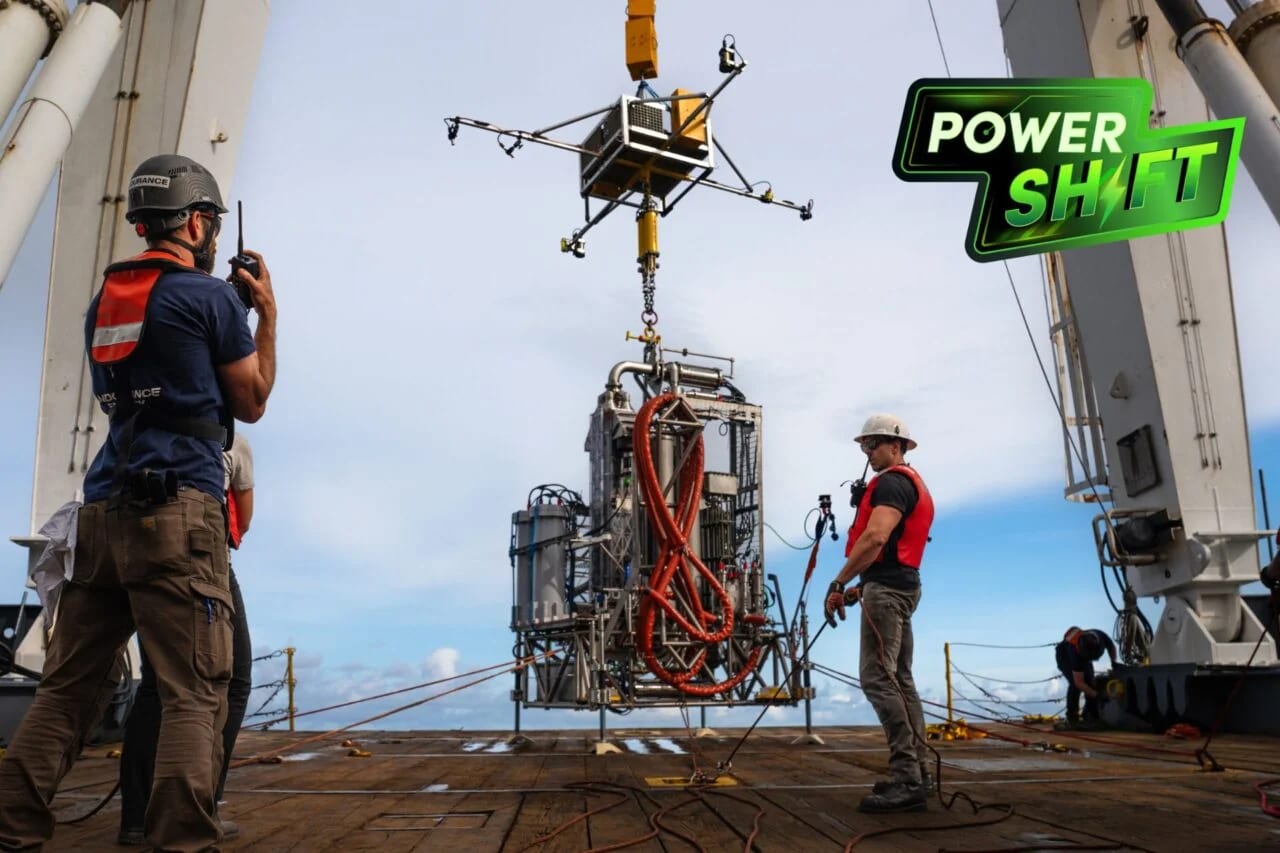
A Seattle startup has run a power plant on the seafloor, using heat from an active underwater volcano. Endurance Energy says its test plant made more electricity than it used for 8.7 seconds. That is a very short run, but the company calls it a first of its kind. The harder job, keeping it going for long stretches, is still ahead.
What happened
The test took place at Axial Seamount, a volcano about 300 miles off the coast of Oregon. The plant, named Adélie, uses hot water that flows out of the seafloor. It produced a median of about 2 kilowatts of net power and peaked at 16.5 kilowatts. Net means the power left over after the plant ran itself. The plant is built for 100 kilowatts.
What went wrong
The crew drilled a well, but it did not deliver enough hot fluid. So the team switched to a natural vent nearby. The plant briefly made net power there, until a software problem stopped it. A restart attempt failed when a power cable feeding the plant's refrigerant pump gave out. The test ended.
Founder Andrew Redd, a former SpaceX engineer, said none of this points to a problem with the heat source or the physics. He called them engineering issues with known fixes: deeper wells, sturdier electronics and better subsea cables.
Why experts are cautious
Outside experts told Gizmodo the idea looks workable but the road is long. Dani Merino-Garcia of Project Innerspace said the vent fluid is very hot and highly acidic. That could corrode or clog the heat exchanger, the part that moves heat into a second fluid that spins the turbine.
- Repairs on the seafloor are high risk and very expensive.
- Stanford's Roland Horne said subsea deployment is likely to be costly too.
- Redd noted the team retrieved, serviced and relaunched Adélie within 16 hours of the first failed attempt.
Why it could matter
The appeal is steady, clean power that does not depend on weather. Redd pointed out that many places with strong offshore heat also rely on imported fuel. For them, he said, local power could replace diesel. He expects the technology to compete on cost in open electricity markets as it matures. That is a claim, not a result.
What happens next
Endurance plans to test an upgraded version, called Gentoo, this winter. It will have redesigned cables, tougher electronics and deeper wells. The company's first commercial project is planned for the Kingdom of Tonga, with power targeted for 2027. Given this first test, Gizmodo described that timeline as ambitious. Whether the plant can run for hours, months or years at a workable cost is not yet known.
The takeawayPower from an undersea volcano worked for 8.7 seconds, so the idea is plausible, but lasting and affordable operation is still unproven.