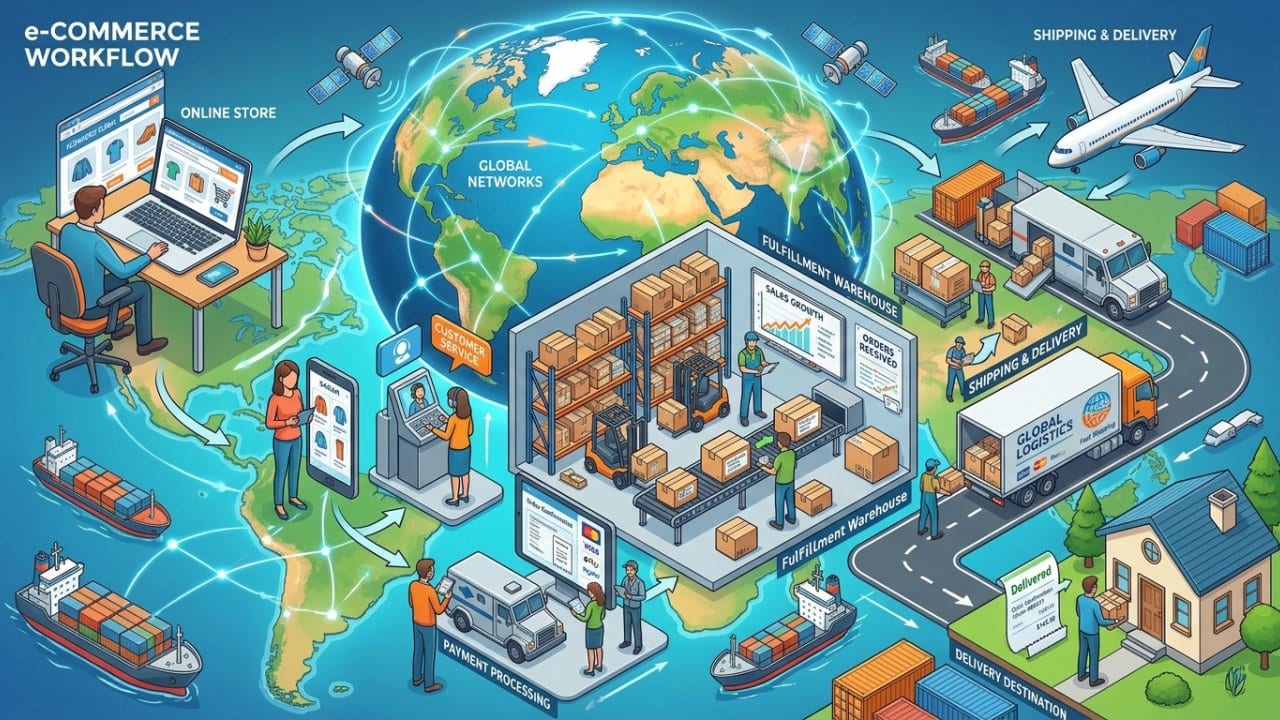
Selling to shoppers in other countries is not just a matter of putting products on a website. A new small business guide says success depends on language, currency, payment options, local laws and shipping. Skip those, and fines and delays can eat the profit you hoped to make.
Why businesses are looking abroad
Global retail ecommerce sales are projected to exceed $8 trillion by 2027. About 59% of online shoppers have bought from a store based overseas. That suggests many customers are already willing to buy from sellers in other countries.
Make the store feel local
The guide calls this localizing. It means adjusting your site to fit the place where the customer lives. Payment habits are a good example, because they differ by country. Debit cards are popular in the US and UK. Online payment services dominate in China.
- Show the local language and currency.
- Offer the payment methods shoppers in that country already use.
- Keep marketing messages in line with local cultural norms.
- Optimize for international search so local shoppers can find you.
Shipping, customs and returns
Reliable delivery builds trust. The guide suggests partnering with dependable shipping providers and giving customers tracking they can follow in real time. Local fulfillment centers, which store and ship goods from inside the target market, can cut shipping times and costs.
Customs rules matter too. Failing to follow them can lead to delays or extra charges. Easy returns, such as local return centers, can also make shoppers more comfortable buying from abroad.
Taxes and legal rules
Each region can have its own legal requirements. The guide points to sales taxes such as VAT and GST, and to data privacy laws such as GDPR, the European privacy rule. Learning these before you launch helps you avoid fines and operational trouble. Some online shop platforms include compliance features that can help with accurate reporting.
What to do
Start with research. Identify countries with strong demand and look at the competition there. After launch, track your performance numbers and use them to adjust products, pricing and marketing for each market. The guide does not say how much any of this costs or how long it takes, so those figures need checking for your own business.
The takeawayBefore listing products abroad, learn the local tax rules, payment habits and shipping options so fines and delays do not erase your profit.