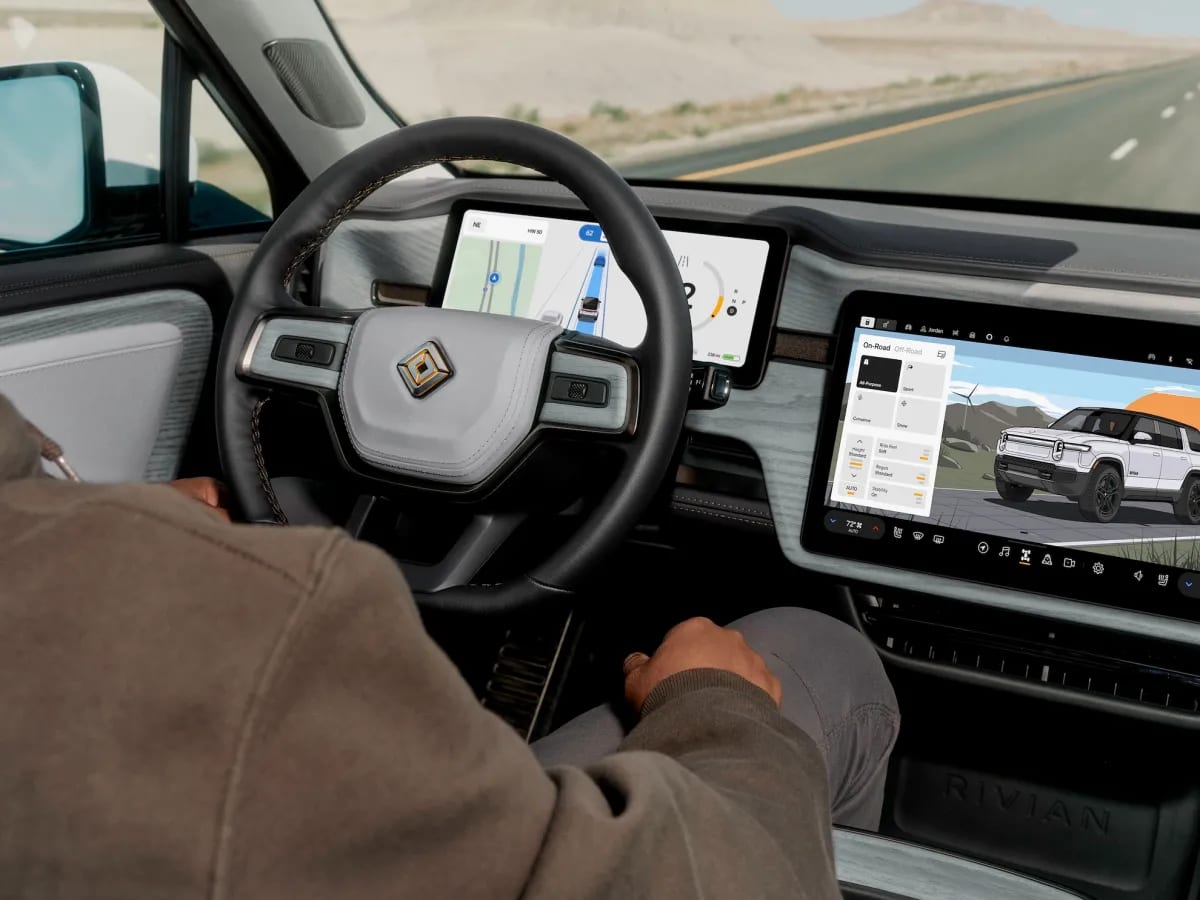
Rivian has bought Third Dimension, a U.K. startup that uses AI to turn photos and video into lifelike 3D worlds. Rivian is not moving into video games. It wants to use the technology to turn real driving footage into virtual scenes that can speed up its driver-assist features and the self-driving system for its planned robotaxis. Terms of the deal were not disclosed.
What Third Dimension does
Tolga Kart and Piotr Sokólski founded the company in 2024. Its technology was first built to speed up video game development. The founders also saw uses in defense and self-driving cars. The company raised $7 million in seed funding. Its 15 employees, most of them in the U.K., will join Rivian's autonomy and AI team, led by James Philbin. Rivian may also expand its AI hub in London.
Why simulation matters
Self-driving developers test their software in simulators, which are virtual roads. Older simulators were built on video game engines and often used made-up, synthetic data. Kart said they can look real, but a gap with the real world remains. Closing it usually means feeding in far more data.
Philbin said Rivian wants to take real events and make them replayable. Engineers can move the camera, shift other cars and people, or change the lighting and weather. He said these are real things that happened, not video game styles.
Where the data comes from
Rivian collects driving data from tens of thousands of R1T pickups, R1S SUVs, delivery vans and R2 SUVs. That covers any vehicle whose owner has turned on external camera sharing. Rivian says the data is aggregated and anonymized. Philbin said more than 400,000 driving clips a day are uploaded from customer fleets.
The new tools could also let Rivian recreate rare, tricky situations without waiting for them to happen on the road. Philbin said this matters most for checking whether the software is good enough to ship. A test only counts if the simulation behaves like the real world.
What Rivian offers now and next
- Today: Universal Hands-Free lets drivers take their hands off the wheel on highways while still watching the road.
- By the end of the year: a version for surface streets and highways, with the driver still supervising and ready to take over.
- 2028: robotaxi versions of the R2 SUV on the Uber app, aimed at full autonomy.
What to know as an owner
Camera sharing is an owner setting. Rivian says the footage it uses is aggregated and anonymized, but this deal shows how valuable that footage is for training and testing its software. The material does not say how the Third Dimension technology will change any current feature.
The takeawayRivian is using real footage from customer vehicles with camera sharing turned on to build 3D test worlds for its driving software.