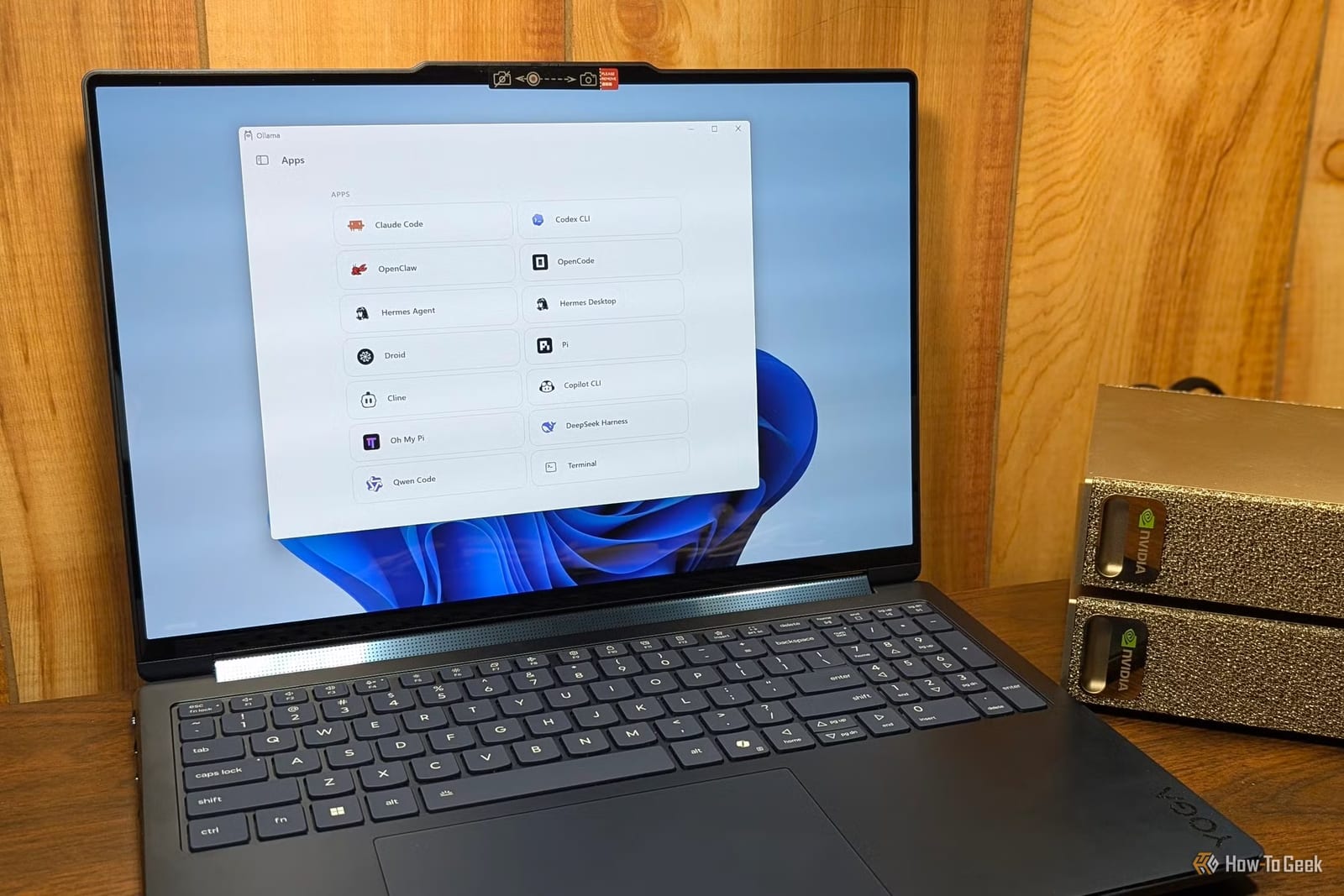
Nvidia has announced RTX Spark, a line of laptops and desktops built to run AI on the machine itself instead of in the cloud. A How-To Geek reviewer who tested one says it does what Microsoft's Copilot+ PCs promised in 2024 and mostly failed to deliver.
What changed
RTX Spark comes in two versions. The top model pairs a 20-core processor with a Blackwell graphics chip that has 6,144 CUDA cores, and it supports up to 128GB of unified memory. That means one shared pool of memory for the processor and graphics chip. The cheaper model has an 18-core processor, 5,120 CUDA cores and up to 32GB of memory.
The top chip uses the same design as the DGX Spark, Nvidia's personal AI computer. The memory in RTX Spark is often about 10% faster, according to the review.
Why Copilot+ fell short
Microsoft's Copilot+ PCs needed a special AI chip, called an NPU, that could handle at least 40 trillion operations per second. The review says few AI models at the time could do useful work on that little power. The best features stayed in the cloud, so an AI PC was not much different from any PC connected to ChatGPT or Claude.
The rules also ignored graphics chips already in many laptops. A mobile RTX 4050 offers just shy of 200 trillion operations per second. The review says millions of PCs were shut out of Microsoft's AI features anyway.
What the test showed
The reviewer tested a 64GB, 20-core RTX Spark laptop. It beat a DGX Spark by about 10% in how fast it produced text from an AI model. It also ran models much larger than the reviewer's 16GB RTX 5070 Ti could handle.
The bigger point was running several tools together, all without the cloud:
- One mid-size AI model, using less than 30GB of memory with context
- Separate models for speech-to-text, image description, editing and text recognition
- An experimental tool that turns plain language into PowerShell commands
The whole setup used less than 40GB, leaving 24GB for Windows, regular apps and more models.
What is not known yet
The material does not give prices, release dates or which stores will sell RTX Spark machines. It also does not say how the cheaper 32GB model handles the same workload. The impressive results come from one reviewer using the 64GB, 20-core version.
The takeawayIf you want AI that runs offline on your own files, watch RTX Spark, but wait for prices and more tests before your next upgrade.