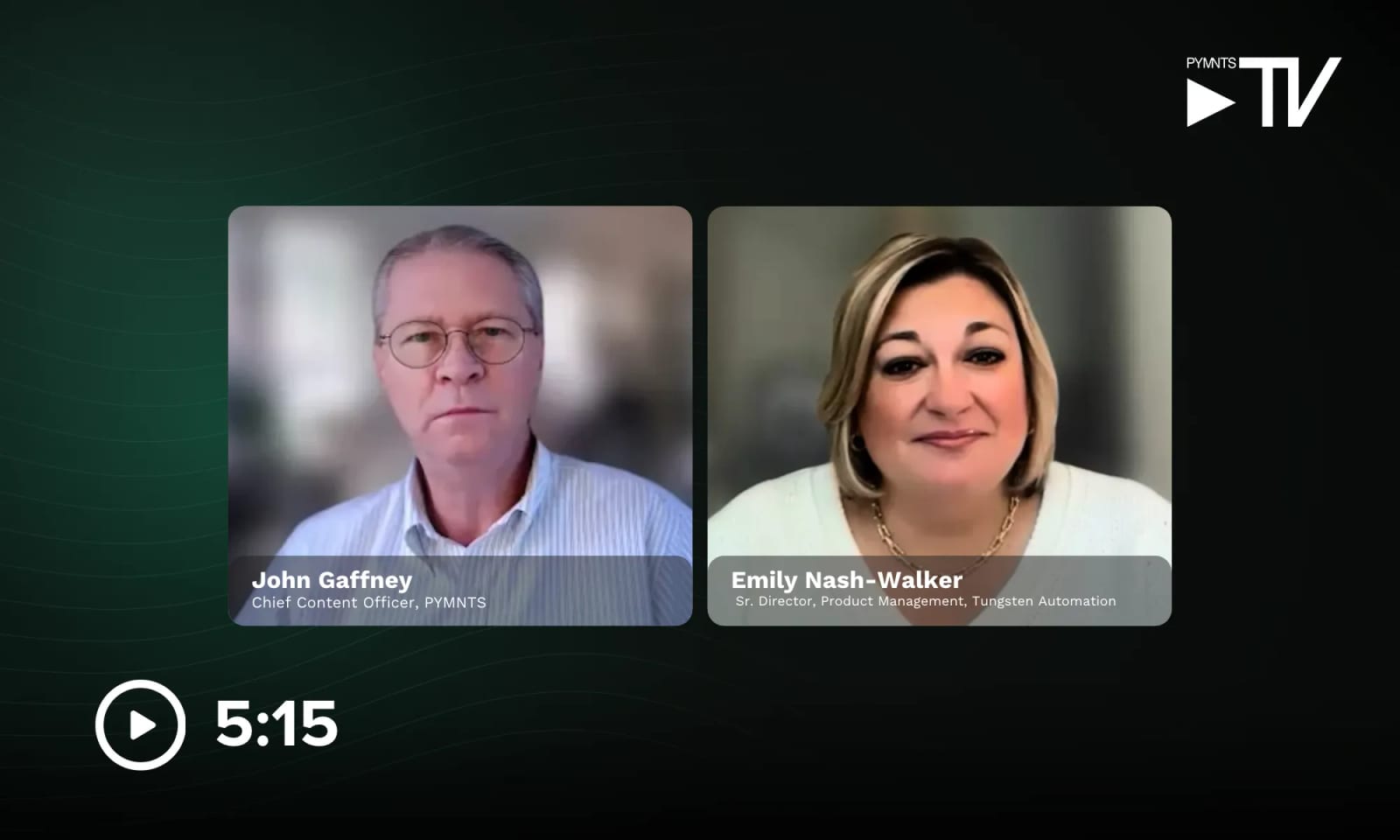
Software can pay routine bills on its own while a person still approves the big or unusual ones. That is the view of Emily Nash-Walker, senior director of product strategy at Tungsten Automation. She laid it out in an October interview with the payments news site PYMNTS.
What can run on autopilot
Rent, utilities and payments to established suppliers can pass through preset controls. A recurring payment to a known supplier can be automated within defined limits. Nash-Walker said reviewing every single transaction adds a lot of time to the process, and "time is money."
What still gets a human look
A large payment, a supplier in an unfamiliar country or any exception to normal activity may still call for review. Nash-Walker gave one example: a payment above a set amount going to a country where the company does not usually pay suppliers. She does not expect approvals to become fully automatic.
She pointed to payments of $100,000, $250,000 or $1 million. A CFO may still want someone to review why that money is leaving the company.
Where AI fits in
Nash-Walker expects AI agents to take over work now done by rules engines. Agents are AI tools that carry out tasks. Rules engines are programs that follow fixed instructions. She said the agents must be auditable and traceable, meaning their actions can be checked and followed afterward.
Her example was a business operating in all 50 states. If one state changes a requirement, an agent could adjust for that state. Developers would not need to rewrite a larger set of rules by hand.
Tungsten's role, she said, is to let customers decide when rules apply, when AI is used and when automation is allowed. The limits stay with the company.
Records and local rules
Paying across borders adds complexity. Nash-Walker said changes expected in Brazil will affect how taxes are handled alongside payments. Poland and France are also going through regulatory changes. Automation still has to keep the records needed for tax reviews and routine audits. She said traceability, reporting and designated stops can do that without an employee checking every payment.
Who is responsible
Removing manual steps does not remove responsibility. Asked who answers when an automated system gets it wrong, Nash-Walker pointed to the person who signs off on the transaction. She added that the responsible party and the rules can differ by jurisdiction. "Ultimately, it comes down to a transaction level," she said. "A system is only as good as the rules that you put in place."
The takeawayAutomate routine bills, but decide in advance which payments are big or unusual enough to need a person's approval.