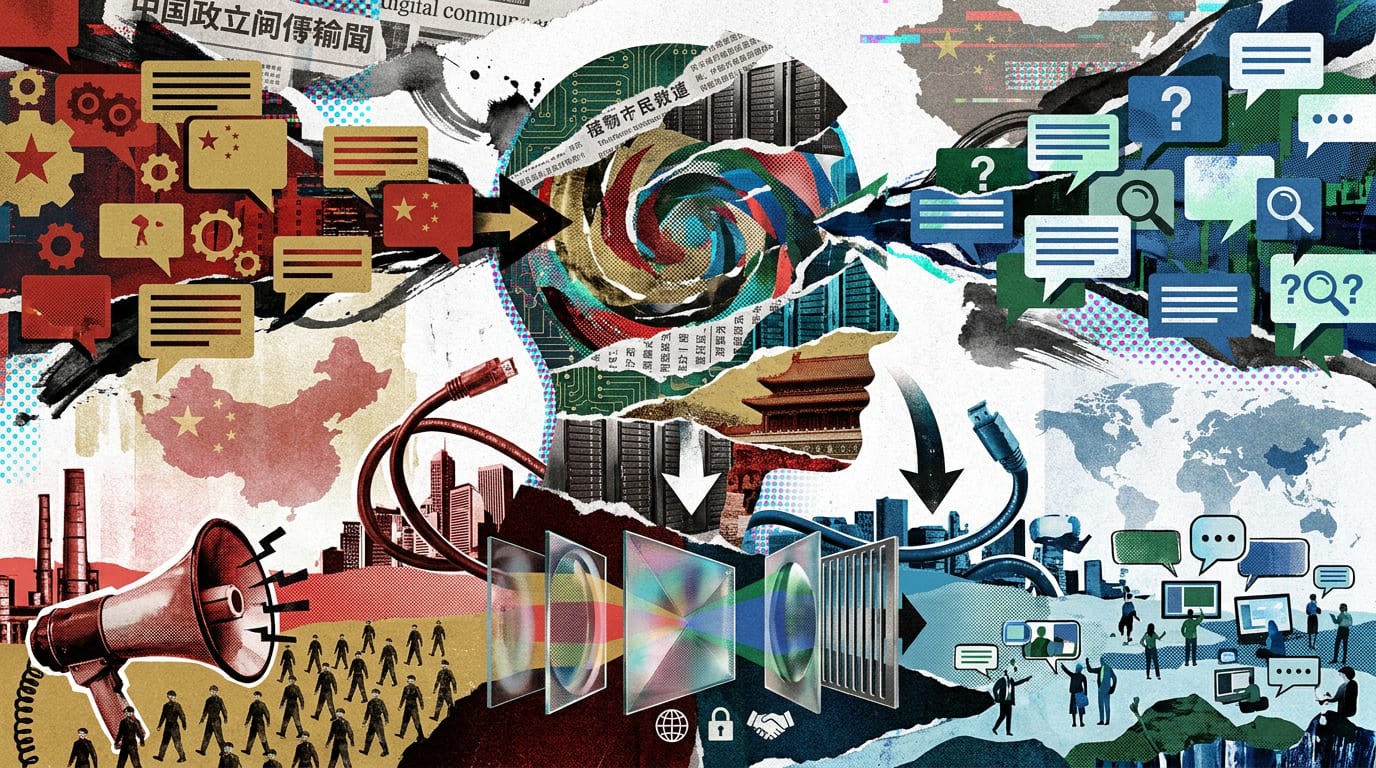
A new study suggests Chinese AI chatbots are less uniform on politics than their reputation says. Vals AI, a firm that benchmarks AI models, tested 25 of them with hundreds of questions about China. The Chinese models leaned toward Beijing's positions less than expected, though results varied widely. Some Western models also occasionally echoed official Chinese views.
How the test worked
Vals scored each model from -1 to +1. Positive numbers mean more agreement with the Chinese government's positions. Negative numbers mean more critical answers. The score measures alignment, not whether an answer is factually correct. The team changed the language, the setting and the answer format to see what moved the results.
Language changes the answer
For most models, questions asked in Simplified Chinese got more pro-government answers than the same questions in English, Russian or Spanish. This showed up in both Chinese and American models, but it was much stronger in the Chinese ones. Vals also found a smaller gap between Simplified Chinese, used in mainland China, and Traditional Chinese, common in Taiwan and Hong Kong.
Vals suspects models guess the expected viewpoint from the language itself. A second test fits that idea. When a model was told it was used inside a company on mainland China, some answered in a more pro-government way than when told it was used in the US.
Echoing instead of refusing
Only certain DeepSeek models mostly blocked sensitive questions. Most other Chinese models rarely refused. Instead, they sometimes gave the official line. Kimi K3 denied that concentration camps for Uyghurs exist in Xinjiang and called them vocational training centers. GLM-5.3 Flash, by contrast, said China's human rights violations are well documented.
Format mattered too. Forcing a yes or no answer made GLM-5.3 Flash and MiMo V2.6 Pro score much less pro-government.
Everyday tasks and fixes
Political leanings were much harder to spot in realistic work tasks. Still, there were examples.
- Translating country codes into Simplified Chinese, Qwen3.8 Max wrote "Taiwan, China." Most other models wrote "Taiwan."
- OpenAI's GPT Image 2.5 Sunburst labeled Taiwan as "Taiwan Province" and added the nine-dash line when prompted in Chinese.
- Thomson Reuters' retrained model cut its pro-Beijing answers from 84.6 percent to 15.0 percent.
Some of that retrained model's answers still defended Beijing's positions on Taiwan.
Limits of the study
Vals says its questions are not typical user prompts. Refusals counted as neutral, so a model that blocked everything could look neutral. Many Chinese models were tested through third-party providers, not the makers' official apps. Official versions may add content filters, so the results may not match the public chatbots.
The takeawayOn sensitive topics, ask in more than one language and check more than one source, because the same AI tool can answer differently.