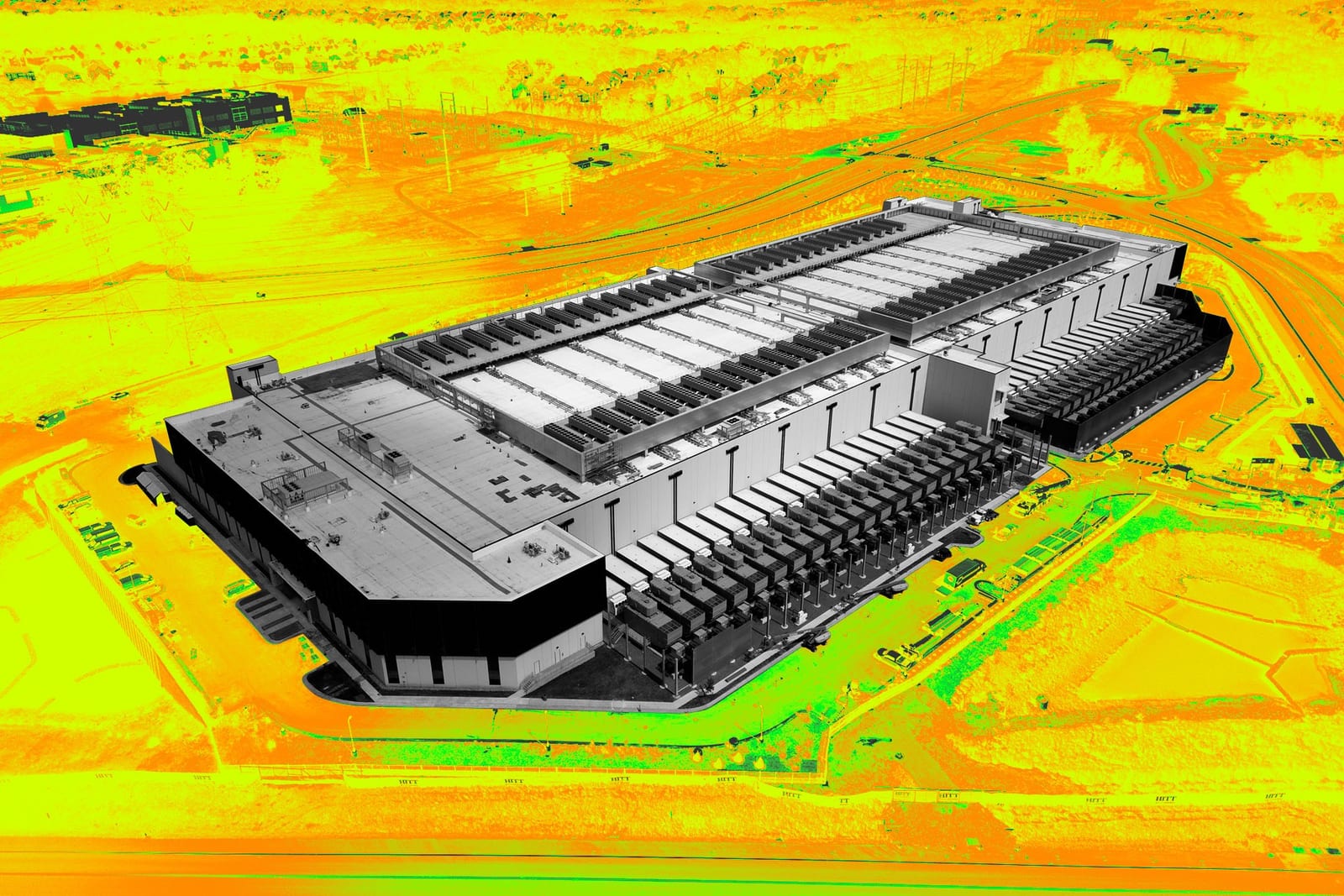
Texas could breathe dirtier air within five years because of the AI data center boom. A new report from the Houston Advanced Research Center (HARC) says that if all planned data centers plug into the Texas power grid, pollution from power plants could climb back to levels not seen since the 2000s.
What the report found
HARC looked at a scenario where every planned data center connects to the grid and is powered by the mix of energy sources expected for it. In that case, fine particle pollution, or soot, from the power sector would more than triple. That would be its highest level since 2006.
- Smog-forming NOx emissions would rise 136 percent, close to levels from 2004.
- Carbon dioxide, a gas that warms the planet, would be 90 percent above 2025 levels.
- The report says this could wipe out decades of air quality gains in just five years.
Why the power source matters
Data centers use a huge amount of electricity. How that power is made decides how dirty the air gets. HARC found that NOx emissions could be up to 10 times lower if developers add solar and wind power on site alongside grid power.
The opposite could also happen. Some developers want to build gas engines on site to avoid long waits to connect to the grid. That path could lead to the highest pollution levels in the report.
Why Texas is the test case
Texas leads the country in data center capacity, which is measured by how much power the buildings draw. It has 26 gigawatts of existing and under-construction capacity. A separate Wood Mackenzie report from March found Texas expects four times more proposed capacity powered on site than any other state.
In many cases, developers are choosing less efficient gas turbine technology to build faster. The article says that makes the boom more polluting than it needs to be.
What is not settled
None of this is certain. HARC modeled outcomes based on three different projections for data center power demand. Many proposed projects are speculative and may never be built. The final result depends on which projects go ahead and how they are powered.
HARC CEO John Hall put the stakes plainly. "There is a good chance that our children and grandchildren will breathe dirtier air than we did," he said. He added that years of work to bring emissions down is now at risk.
The takeawayHow AI data centers get their power, not just how many get built, will decide whether Texas air gets dirtier.