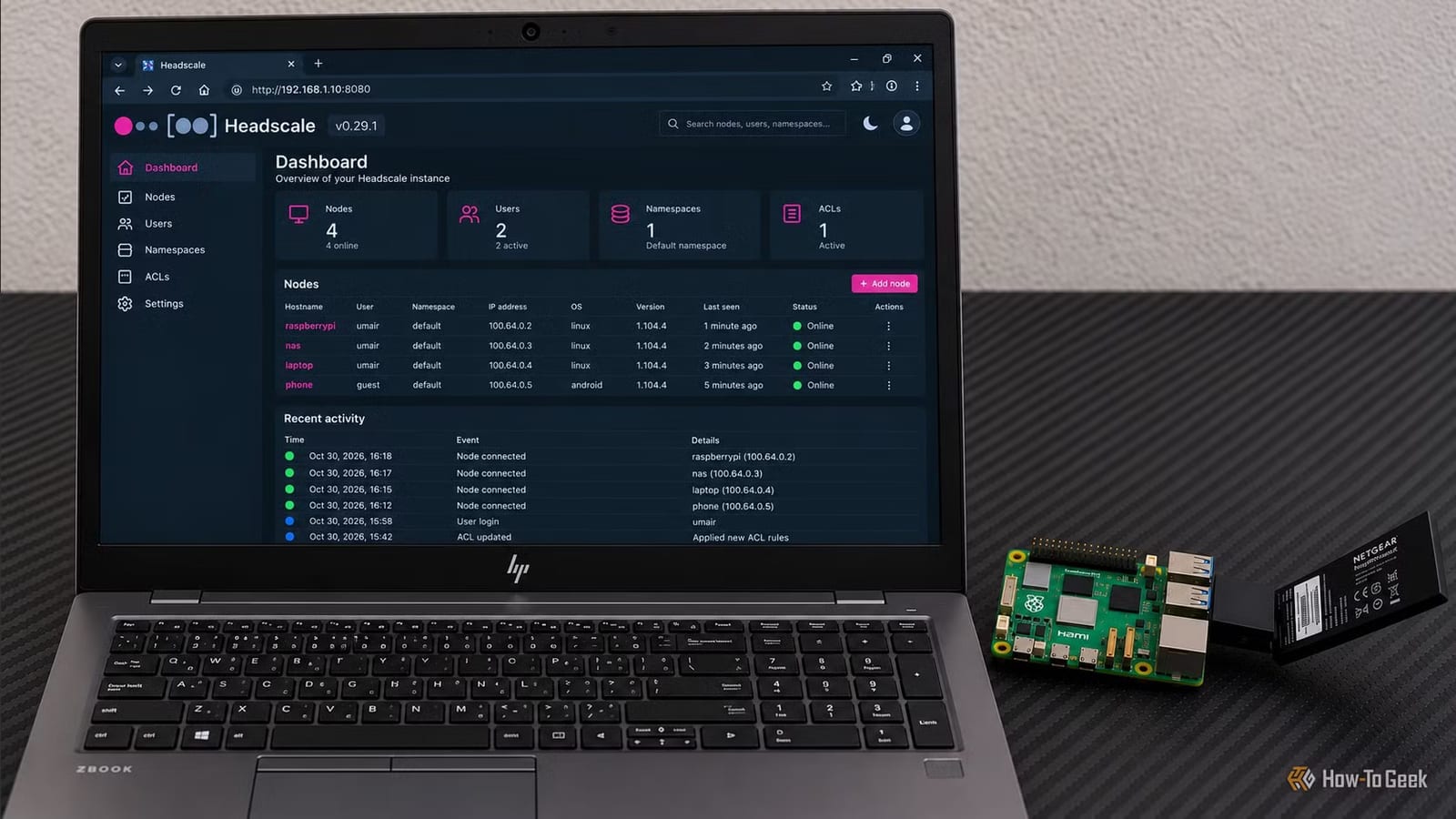
A tech writer at How-To Geek has turned a small Raspberry Pi computer into a travel router that connects back to his home network from far away. Umair Khurshid already owns a dedicated travel router. He wanted more control and easier access to the services he runs at home, so he built this setup with free tools.
What he built
The Raspberry Pi is a low-cost computer that runs regular Linux. Khurshid installed Tailscale on it. Tailscale links your devices into one private network, even when they are in different places. He also uses Headscale, an open-source tool that lets him run his own control server instead of relying on Tailscale's hosted one.
Once the Pi joined his private network, he could manage it remotely without exposing its remote login service to the public internet. He then set it up as an exit node, which sends internet traffic from his other devices through the Pi.
Two features worth knowing
- An exit node sends your general internet traffic through a remote connection, such as your home.
- A subnet router lets your devices reach machines on the network behind the Pi.
- Extra settings on the Pi let other devices join its Wi-Fi without needing Tailscale installed.
Khurshid published his configuration, installation scripts and instructions in a GitHub repository called pi-tailscale-travel-router. He describes it as a starting point for others.
Where it falls short
He does not claim the Pi replaces a dedicated travel router. The dedicated device is still more convenient for quickly joining hotel networks and sharing internet access with several devices. The Pi's strength is flexibility, since he can tune it for specific tasks and fit it into his home lab.
Hardware matters too. The Pi's networking speed depends on its model, its wireless setup and the connections it has. He already had a Wi-Fi adapter. Buying every part new could cost more than a ready-made travel router.
Who should try it
This suits people who already own a Raspberry Pi and enjoy tinkering with networks. For them, it is a low-risk way to reach home devices safely while traveling. Anyone who just wants easy hotel Wi-Fi will likely be better served by a dedicated router. The article also notes that approving an exit node in Headscale varies by version and setup.
The takeawayIf a spare Raspberry Pi is already in a drawer, it can double as a private travel router, but buying parts new may cost more than a ready-made one.