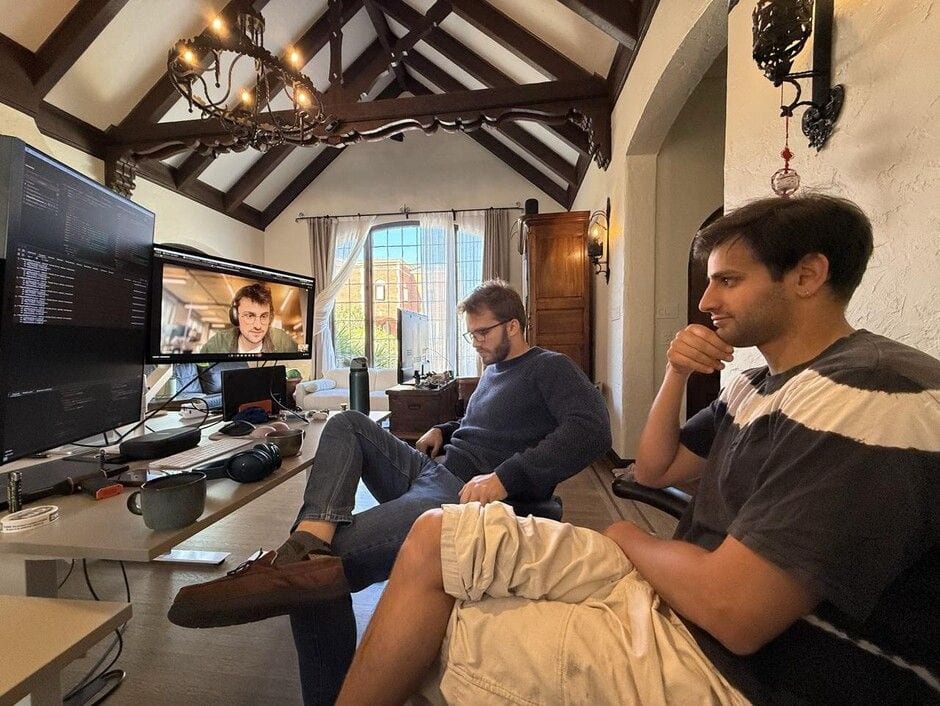
Dylan Anderson was a software engineer at what he calls "some random place in Minnesota." Now he is the first engineer at Adam, a Y Combinator W25 startup that builds AI agents for CAD software. CAD programs are used to design things. AI agents are programs that act on tasks. He got the job through a friend of a friend, a work trial and a move to San Francisco.
How he got the job
A roommate of Adam's founders was asked if he knew any "cracked" engineers, meaning very skilled ones. Dylan's name came up. He did a work trial, which is a stretch of real work with the team before anyone commits. Then he moved to San Francisco.
The trial did the convincing. He saw that the founders gave him real freedom and trust from day one, and that the team worked with almost no friction. He also saw clear, relentless drive from everyone. Moving to SF was something he already wanted, to be at the center of things. Adam gave him the reason.
What the work is like
As engineer number one, Dylan touches nearly everything. The codebase has been rewritten multiple times, and the systems in place are ones he built. "If I want to build something to improve my life I do it, if something bothers me I fix it," he says.
He contrasts that with big companies, where he says an engineer is "like an interchangeable piece that fits into a preexisting slot." At Adam, he says, "you're the one building the engine."
He is clear that this is not a story about bad work-life balance. The line between work and life is blurred in a way that feels right to him. The founders are some of his closest friends. That raises the stakes on communication, but it also means he cares more about his craft.
What changed for him
Dylan says he has become more intentional and more focused on value. "Each of my actions directly impacts the performance of the company," he says. Tinkering for purely academic reasons is over. He now asks what value each thing he builds provides. He expects his role to grow into mentorship and leadership as Adam grows.
His advice
His guidance is blunt: think about value deeply and do not join a startup built on a weak idea. He warns that pouring work into a bad idea will make you hate everything you do. He describes the result as "passive nihilism." The story does not say how big Adam's team is or how far its product has come. It describes the right fit for a role like his this way:
- Someone who wants to own everything they build
- Someone who cares about the problem more than the title
- Someone ready for the work to become part of who they are
The takeawayBefore joining an early startup, ask whether its idea has real value, because years of work on a weak one can wear you down.