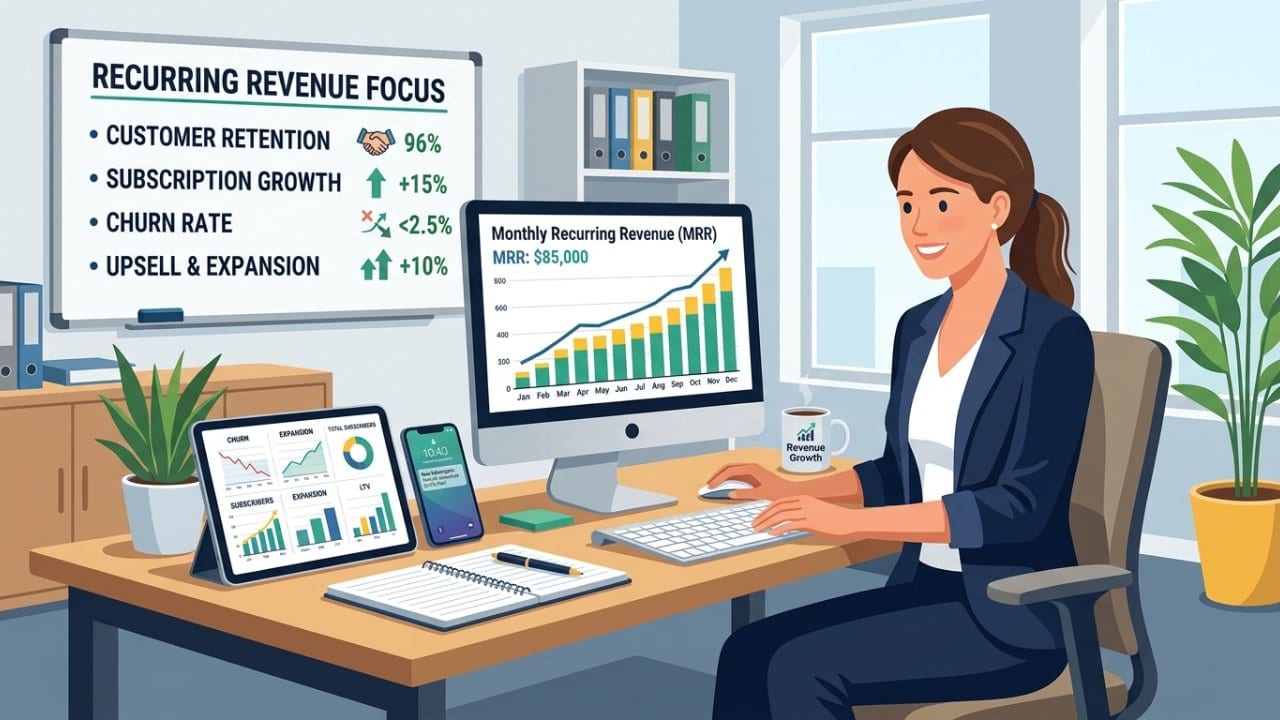
A new guide from Small Business Trends makes a simple case. If your business earns money from subscriptions, retainers or service plans, you should manage that income, not just collect it. The article says the subscription economy has grown 435% over the past nine years. It does not say where that figure comes from.
What it means
Recurring revenue management is the practice of overseeing income that arrives on a schedule, such as a monthly fee for software or a regular support plan. The goal is steady cash flow, which makes planning easier. The article says 70% of business leaders see customer retention and loyalty as essential for long-term success.
Numbers to track
- Monthly recurring revenue (MRR): the predictable income that comes in each month.
- Annual recurring revenue (ARR): the same idea measured over a year.
- Churn rate: how many customers leave.
- Gross and net revenue retention (GRR and NRR): how much revenue you keep from existing customers.
The article says these figures show how healthy your model is and help guide decisions.
Ways to earn recurring income
- Subscriptions: a recurring fee for ongoing access to a product or service.
- Security as a service: ongoing IT protection for a fixed price.
- Maintenance: regular fees for support.
- Retainers: services secured over a set period.
The article also says long-term contracts can add stability and client trust. It cites a projected $1.5 trillion subscription economy by 2025.
Common problems
The article lists high customer acquisition costs, customers leaving, strain from changing technology and complicated contracts. It also points to failed payments. Dunning management, meaning a process for following up on payments that did not go through, is its suggested fix. Keeping a customer is often cheaper than finding a new one, so the guide urges better service and regular engagement.
What to do
Automated billing is the guide's main practical tip. It says automation can cut errors and help with ASC 606, an accounting standard for recording revenue correctly. It suggests Intuit software as one option. It also recommends service level agreements, which are written promises about service quality, to set client expectations and reduce churn. The piece is a general overview, not a study, and it offers no business-specific results.
The takeawayIf you sell subscriptions or retainers, start by tracking MRR, ARR and churn, and automate your billing to cut mistakes.