Security teams often know the fix for a critical alert, yet the ticket can sit for days. The reason is simple. The people who keep systems running want proof that the change will not break anything. A Check Point white paper on what it calls safe remediation says a test-first process can settle that doubt with evidence.
Why fixes stall
The worries are practical. A protection that blocks attacks could also block real customers. A settings change could interrupt a service. A rule on employee computers could affect an app the business relies on. Without evidence, the recommendation waits.
Many organizations also own protection they do not use. Some tools sit switched off, or in Detect mode, where they watch traffic but do not block it. In the white paper, 47% of the organizations measured had less than half of their available protection switched on.
The four steps
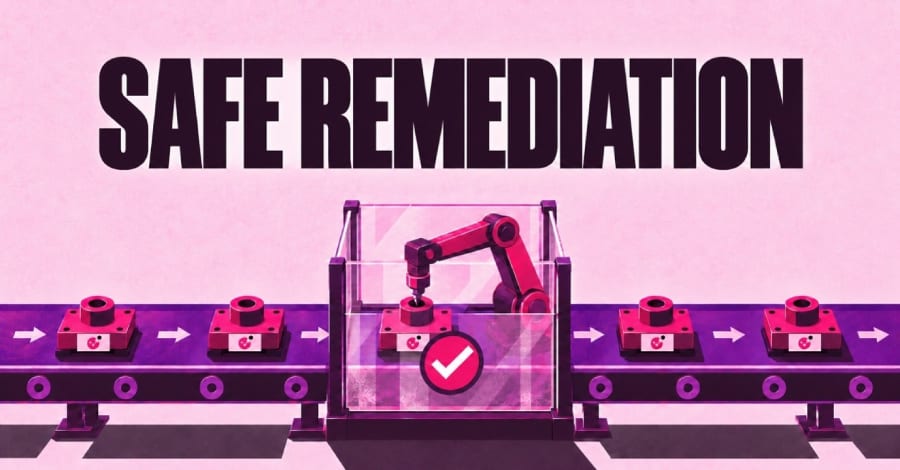
The paper describes four stages, with evidence carried through each one. Turning everything on is not the goal, because every change carries risk.
- Observe: use data the company already has, such as vulnerability findings and traffic.
- Prove: test the change, for example by watching live traffic in Detect mode first.
- Act: get approval, or allow automatic runs, then apply the change.
- Confirm: check that the protection is active and record who did what and when.
Patches still matter
A stopgap is not a cure. Patching fixes the underlying flaw, but testing and scheduling can delay it. An existing protection can block the attack path in the meantime. The paper says records should separate this interim cover from a permanent fix, because the flaw stays open until it is patched.
What the numbers show
Across the organizations measured, fix actions succeeded 99.5% of the time. Over one month, protections applied this way blocked 703.56 million attacks. About 21 million of those came within 24 hours of the fix. The paper says these results describe the environments it analyzed.
The white paper comes from Check Point, which sells a product built around this process, so the figures are the vendor's own.
The takeawayAsk your IT team whether protections you already pay for are switched on, and how they test a change before turning it on.