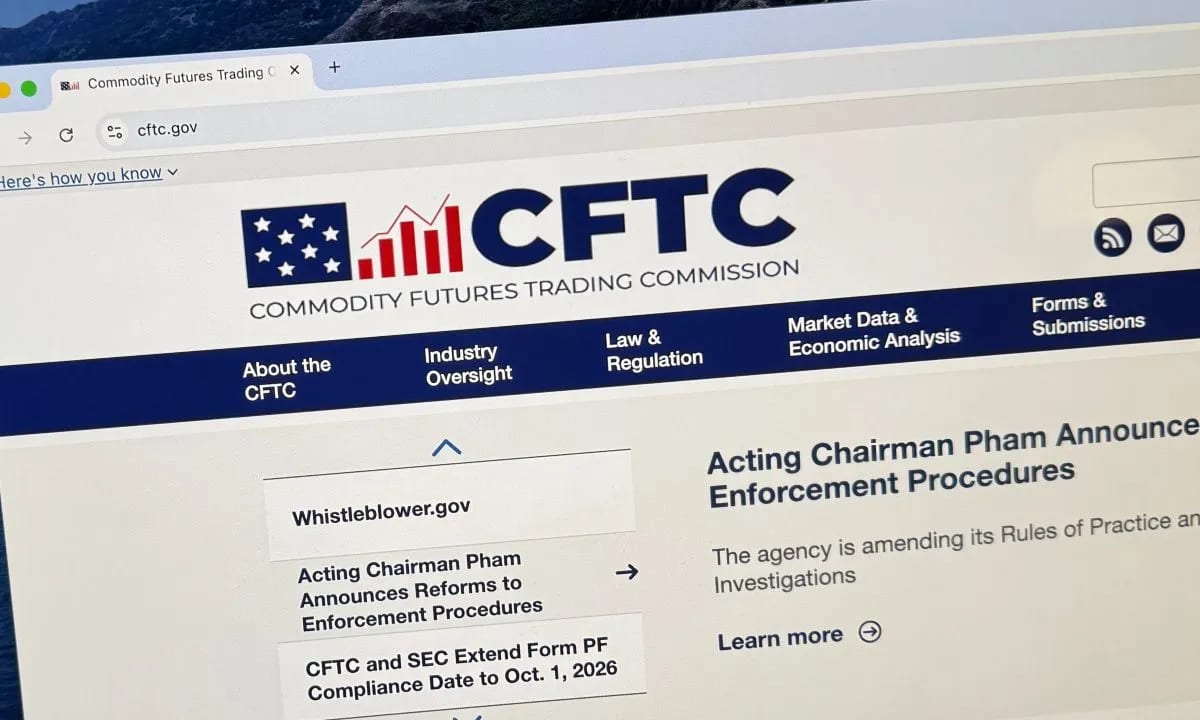
The head of the US commodity trading regulator says businesses that rely on AI may need a way to protect themselves from swings in computing costs. CFTC Chairman Michael Selig spoke Wednesday, Oct. 28, at the agency's first Frontier Forum in Washington. He also said rules for AI software that trades on its own are still an open question.
What compute futures are
"Compute" is the computing power AI systems need. It depends on specialized chips, electricity and data centers. A futures contract lets a buyer lock in a price ahead of time. Selig compared it to farmers hedging crop prices and airlines managing fuel costs. "Hedging" simply means reducing the risk that a price moves against you.
He said AI developers, infrastructure providers, cybersecurity companies and investors could all need such tools. Earlier this year, the CFTC asked the public for comment on compute derivatives markets. More than 100 commenters responded, covering both opportunities and risks.
The question of AI agents
Selig also raised AI agents. These are programs that can spot opportunities, hold assets and make trades for users. The CFTC's rules assume identifiable people doing defined financial work. Agents act with more independence, and that strains the assumption.
"Does the developer of that agent become subject to registration? Who is liable if the agent goes rogue?" Selig asked. He also floated a "know-your-agent" approach, alongside existing know-your-customer checks, to help determine whose interests an agent represents.
Risks and upside
Selig said agents could react in unexpected ways to market conditions. He listed several concerns:
- Agents built on similar models could trade in the same direction at once.
- Fast automated trades could make market surveillance harder.
- Rapid transactions could complicate how risk is managed.
He also said AI can help. It can let exchanges spot suspicious activity, help clearinghouses watch exposures and give regulators a tool to find misconduct. CFTC staff already use AI to police markets, he said. The wider hope is that sophisticated analysis and hedging reach more people than just large institutions.
What is not decided
The speech pointed a direction. It was not a rule proposal, and Selig said his views did not necessarily reflect those of the commission. He gave no details on contract design and announced no approvals. Registration for agent developers and a new identity check were described as questions for further study.
What happens next
Two areas are worth watching: the infrastructure behind compute derivatives, and the rules that decide who is responsible when software trades. Selig urged technology builders and regulators to work together. For a business with large AI bills, the idea is that computing costs could one day be hedged, but nothing is available yet.
The takeawayComputing costs may someday be something a business can hedge, but the CFTC has approved nothing yet and rules for AI trading agents are still being debated.