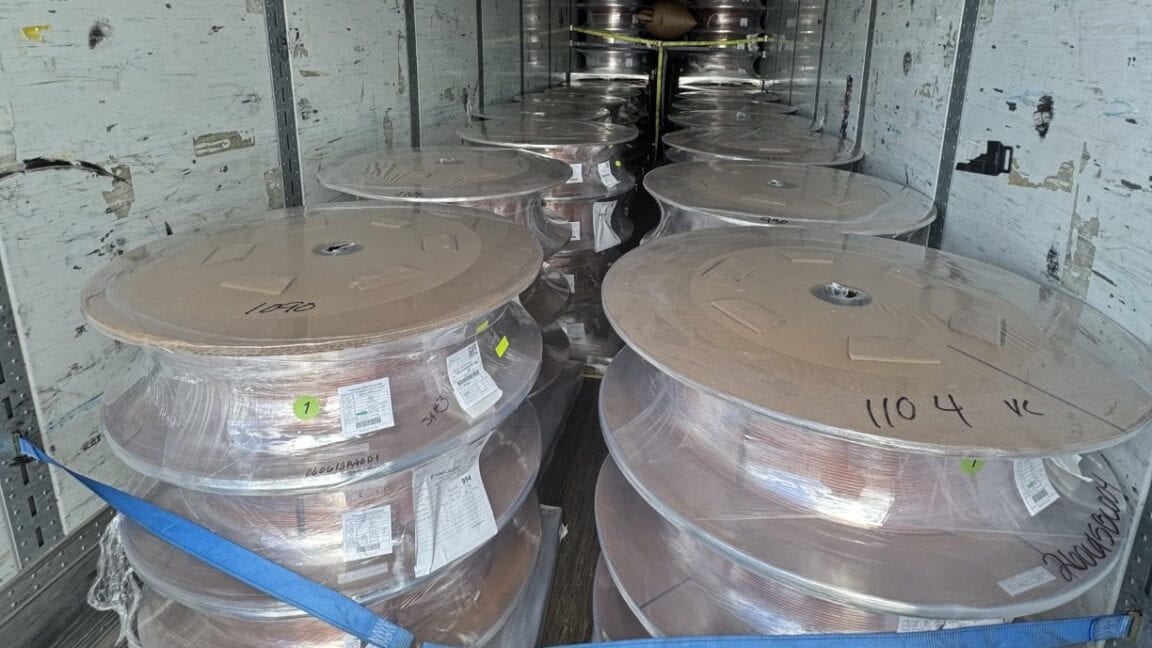
Thieves have stolen more than $100 million in data center equipment since June, NBC News reported. They are not just grabbing parked trucks. They hack shipping accounts, plant fake drivers and, in at least one big case, faked the GPS location that was meant to track the load. One investigator compared the cargo to pure gold bars.
How the scheme works
Investigators told NBC News the thefts often start online. Thieves break into freight brokers' accounts on websites where shipments are listed. A broker is a middleman who matches loads with trucking companies. The thieves post fake shipments and wait for real companies to bid.
- Trucking companies that respond get a malicious link.
- Clicking it lets thieves take over their accounts and bid on real loads.
- A real driver may be hired without knowing, or a fake license gets an accomplice hired.
- The goods end up with a driver working for the thieves.
The biggest cases
In one case, a trailer of server equipment worth $13 million was headed to Fayetteville, Georgia. Two off-duty cops hired as escorts were hit by an unmarked sedan and forced to stop while the trailer drove on. A second shipment, worth about $10 million and headed from California to Texas, was lost the same way, when an SUV struck the escorts. Its tracking app had been fed spoofed coordinates, meaning fake location data. In both cases, none of the equipment was found.
Why this cargo
Targets include servers, fiber-optic cable, memory chips, copper wire and bitcoin mining machines. Experts said the gear is rarely sold on public online marketplaces. It can be broken into parts and sold on gray markets, and a buyer is often lined up overseas before the theft, including in places where US tech is restricted, such as China. Since 2025, there have been nearly two dozen incidents in states including California, Texas and Utah.
Who it affects
The harm may reach beyond the AI industry. In a Los Angeles County case, data center cooling equipment was recovered alongside nicotine pouches, televisions, shoes, printers, speakers and skin care products. Experts worry that ordinary goods on the same trucks are being lost too.
What experts recommend
Scott Cornell, chair of TAPA Americas, a nonprofit focused on supply chain security, said the scheme has a simple weak point. "The only way this works is if the drivers are not properly vetted," he told NBC News. His advice is for freight companies to slow down and run background checks. Anyone who ships or buys goods can ask who handles them and how drivers and brokers are checked.
Lawmakers are also looking at ways to strengthen the federal response to overseas thefts. The material available does not say what any of those proposals would require.
The takeawayIf your business ships or buys goods, ask how drivers and brokers are vetted, because careful background checks are the defense experts point to.