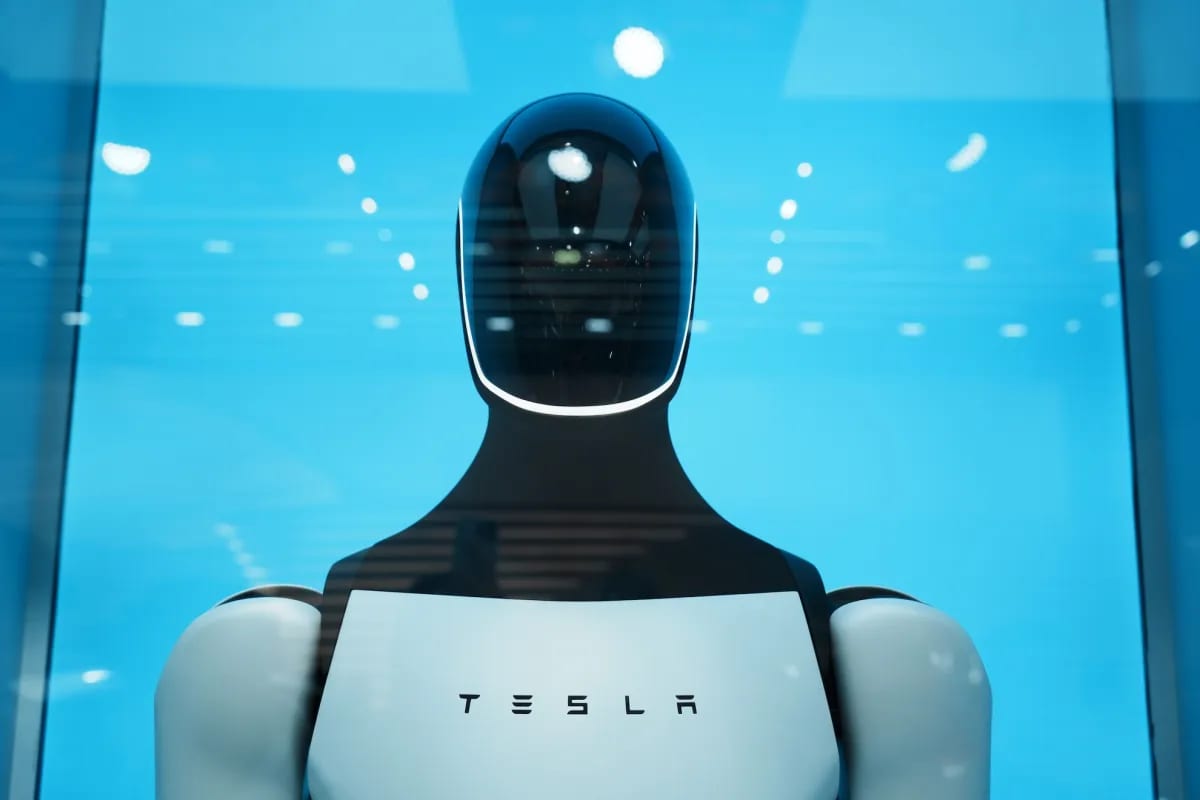
Tesla says it has started producing its Optimus humanoid robot at its Fremont, California factory, in space once used to build electric vehicles. The news landed alongside a weak quarter. Profit fell 43% to $787 million, as Tesla spent heavily on robots, artificial intelligence and self-driving while car sales stayed flat.
What Tesla said about the robot
In its shareholder letter, Tesla said the bots coming off this line are the first production-quality ones it has made. It also said the current process is suitable for a commercial product. Elon Musk called it "early production" and warned the ramp will be slow and "somewhat bumpy." He still claimed Tesla can make 20,000 robots per week by the end of 2027.
Musk admitted there is work left. The design needs tweaks so the robot is safe and reliable and does not wear out after a month. He also said much AI work remains before the robot is truly useful for open-ended tasks, meaning jobs that are not tightly scripted.
The money side
- Net income was $787 million, down from $1.37 billion a year earlier.
- Revenue was $28.04 billion, a hair below $28.09 billion a year ago.
- Tesla delivered 486,532 vehicles, about 6,000 more than the prior quarter but fewer than a year ago.
- Solar and energy storage revenue fell 16% to $2.8 billion, which Tesla blamed on tariff-related customer refunds.
Electric vehicle sales were flat at $20 billion. Lower sales of regulatory credits also weighed on profit. Tesla's spending on AI and Optimus took what the article calls a big bite out of earnings.
The bright spot
Tesla's services business grew 33% from a year earlier to $4.6 billion. It includes subscriptions to Full Self-Driving, the company's driver-assistance software. Services produced a record $734 million in gross profit for the quarter.
What happens next
On the call, Tesla's Elluswamy said the company suspects around the second quarter of next year is when it can turn on some of the first customer vehicles in its robotaxi fleet. That means a software update letting privately owned Teslas with FSD (Supervised) drive without supervision.
In April, Musk said the unsupervised version would "probably" arrive in the fourth quarter of this year. Anyone who owns Tesla stock or drives a Tesla may want to watch whether these timelines hold and whether the spending pays off.
The takeawayTesla is betting big on robots and self-driving while car sales stall, so watch whether the timelines hold and the spending pays off.