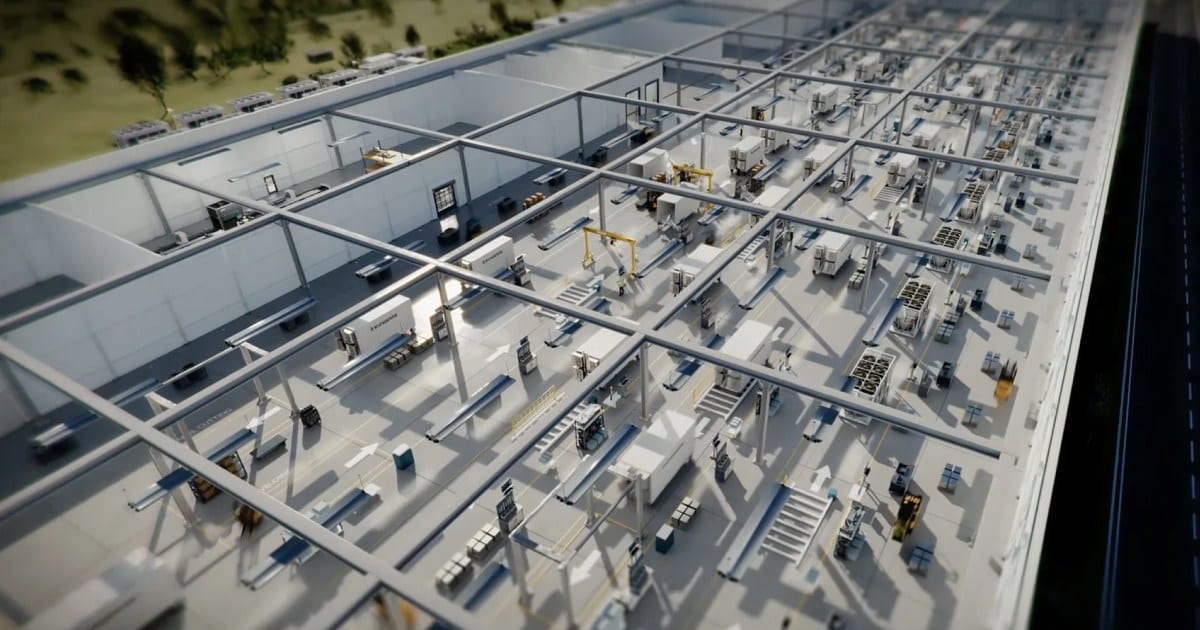
A startup called Runware says it will build AI data centers on an assembly line, much like cars. The company makes prefabricated units, called pods, in a factory and ships them ready to install. It now wants to scale that up sharply. So far, these are plans, not results.
What Runware is promising
Runware's CEO, Flaviu Radulescu, told TechCrunch the company aims to reach 30 megawatts of data center capacity per day by 2028. A megawatt is a measure of electrical power. That pace works out to nearly 1 gigawatt per month. At that rate, Runware would build in a year roughly what the entire U.S. was expected to add this year, about 10 gigawatts.
How the pods work
The company says a pod can be running within 48 hours of arriving on site. That time covers installation and set-up, not the build. A pod once took three weeks to build. The company says it will soon take one day.
- Customers can use their own site, or Runware can find one.
- Customers can rent computing power from Runware or bring their own chips.
- Those who bring chips pay a monthly fee for the pods and operations.
- Power and internet are billed separately.
Runware says the pods need only power and an internet connection. They use a closed-loop liquid cooling system, so they do not really need a water connection. They also run silently up to 86 degrees Fahrenheit, the company says.
Why the test is execution
Runware is not alone. Crusoe and Schneider Electric also sell prefabricated pods, and Nvidia has announced its own designs to speed up data center building. Runware says its edge is that it has actually built a factory. It has one that has made pods for a few years. A second is expected to finish within months and go online early next year.
The risks are real. TechCrunch points to Arrival, an electric vehicle startup once valued at over $13 billion, which struggled to build vehicles cost-effectively. Runware also relies on German suppliers for pumps and fans, and on Nvidia for networking equipment. It has raised more than $60 million, including a $50 million Series A last December.
What the demand looks like
Runware says it has received $1 billion in committed interest since it began offering the pods to outside customers a month ago. That represents over 20 megawatts, which it is now working to deliver. It also cites a pipeline of planned sites covering 397 megawatts, with potential to reach 1.2 gigawatts.
What happens next
Runware plans to bring its new factory online early next year, then expand to the U.S. and other regions. Production would rise gradually starting next year. Whether it can hit its 2028 target, and whether customers get the speed it promises, will only be clear once the factory is running at scale.
The takeawayFactory-built AI data centers could arrive faster and cheaper, but Runware has yet to show it can produce them at the scale it promises.