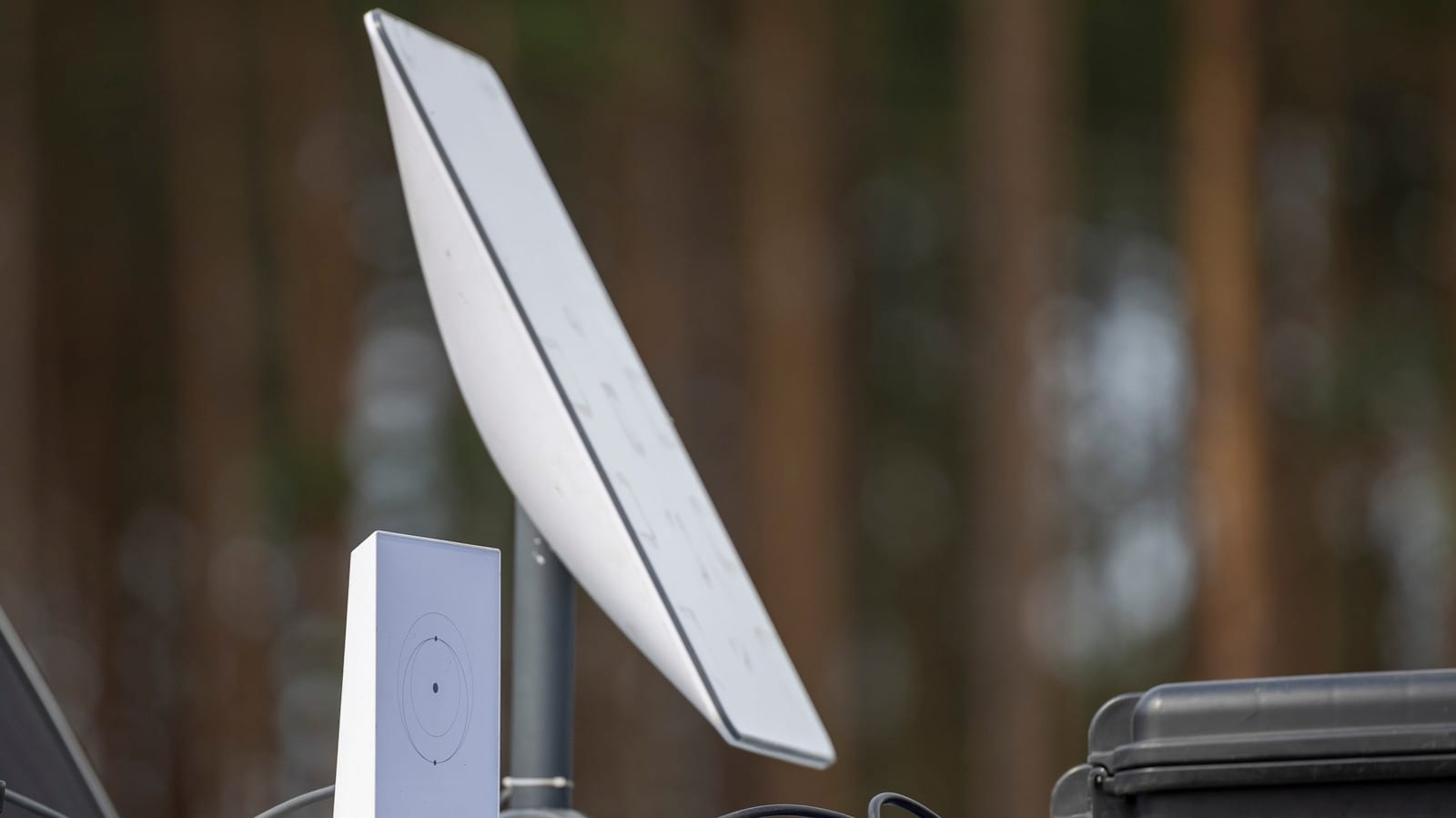
Cable and fiber often win on raw performance. Starlink's real edge is different: it rarely goes fully down. If a single satellite fails, others nearby can take over, so one break is unlikely to leave you offline.
Why it holds up
Starlink sends internet from small satellites in low Earth orbit, meaning close to the planet. As of October 2026, it had over 11,000 working satellites, flying about 205 to 311 miles up. SpaceX keeps launching more, either to grow the network or to replace units that stop working.
A cable or server failure on a traditional connection can knock customers offline for hours. With Starlink, there should almost always be a cluster of satellites overhead. If one fails, another in the cluster can pick up the slack.
Blocked views are less of a problem too. With so many satellites, there is almost always one at a usable angle, as long as the dish is positioned properly.
More satellites are coming
SpaceX recently asked the US Federal Communications Commission for permission to operate up to 100,000 of its Gen3 satellites. It also recently won approval to expand its Gen2 satellites to as many as 15,000. More satellites could make the service sturdier still.
Where it can still fail
The picture is not perfect. Current dishes are built to melt snow, handle temperatures from -40 to 110 degrees Fahrenheit and, if properly mounted, withstand winds over 99 miles per hour. In practice, snow takes time to melt. Brief drops also happen whenever the dish switches from one satellite to another.
Longer outages are still possible. Causes include extreme weather, a systemic problem at Starlink, or trouble elsewhere on the internet. Thousands of satellites do not help if a major ground-based link is struggling.
Who should think twice
Those brief switching blips are a problem for online gaming. In fast shooters like Fortnite or Counter-Strike, a split second can decide a match. Some people also want to avoid Starlink because of the controversies around founder Elon Musk.
- Home businesses: it could work as a backup if staying online matters more than top speed.
- Remote areas: with the right plan, Starlink can reach almost anywhere.
- Competitive gamers: the signal blips may be a dealbreaker.
The takeawayIf staying connected matters more than top speed, Starlink is worth considering as a backup, but fast-paced gamers may want to skip it.