A small battery tucked behind the TV can keep a home's Wi-Fi and smart home hub running when the power drops. That is the core idea in a How-To Geek piece by writer Bertel King, who says solar panels and batteries are the missing link for a smart home. His reasoning is simple. Most outages end within a few hours, and the home should keep working normally during them.
What the setup looks like
The smart home runs on Matter, an open standard that lets devices talk over the home network instead of through a cloud service. A Homey Pro hub manages everything locally. The hub, the main node of the mesh Wi-Fi router and a UGREEN network storage device (a NAS, which is a small home file server) all plug into a Bluetti FridgePower solar generator mounted on the wall behind the TV stand.
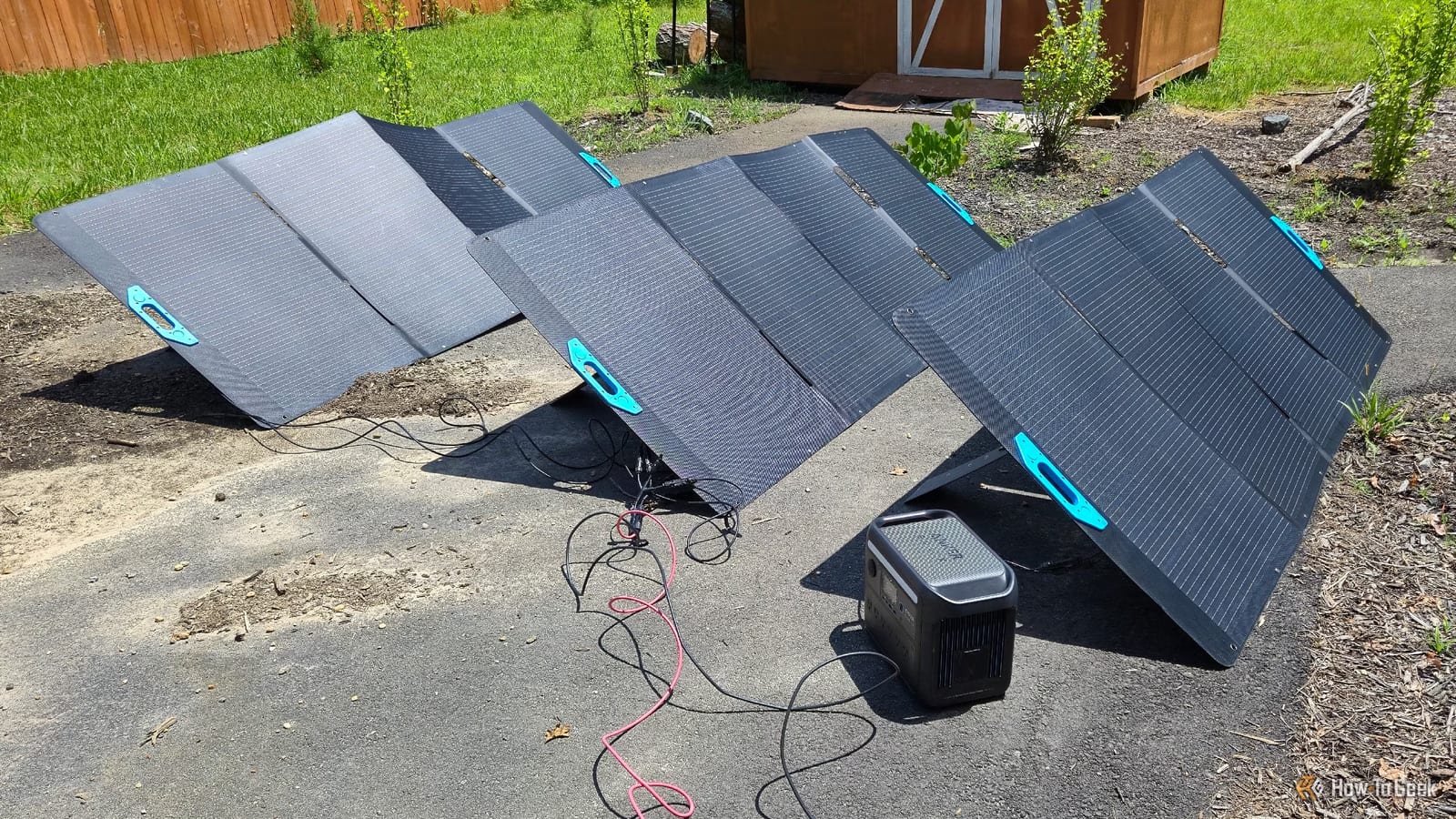
The unit can put out 1,800 watts. That is enough for the hub, storage and Wi-Fi, and it can also run the TV and a Nintendo Switch dock. In a longer outage, portable solar panels can recharge it through an extra-long extension cable.
Keeping the fridge and house going
A second FridgePower with an expansion battery sits behind the fridge. It can keep the fridge running for over two days with no action needed.
The home also has generator inlet ports under the electrical panel, so solar generators can be plugged in to power the whole house. Smart devices use very little electricity, so most of them work again. The thermostat and heating and cooling system are the main exceptions.
Tracking the power
The home's roof is covered in solar panels that meet its energy needs and cover much of the driving for two electric cars. Usage shows up in the Enphase app and the Homey app. That data hints at how big a built-in home battery would need to be. The writer has not bought energy-monitoring tools yet, but notes they could show which devices use the most power and trigger automations.
- Charge cars only when the sun is shining.
- Recharge portable power stations through a smart plug during daylight.
Outdoors without wiring
Powering outdoor devices is hard. Extension cords only reach so far, and hiring an electrician can raise a project's cost. Solar devices with built-in batteries sidestep that. The TP-Link Tapo C660 security camera comes with a solar panel, so it can go anywhere outdoors within Wi-Fi range. Linkind makes solar-powered outdoor smart lights. Mesh Wi-Fi helps extend the signal to those spots.
The bigger point
The writer says a smart home can exist without solar, but it is more exposed to power problems and more limited in where devices can go. He also suggests the cheaper Homey Pro mini over the Homey Pro. His overall advice is to buy as many solar panels and batteries as possible.
The takeawayA small battery on the Wi-Fi and hub covers most short outages, and solar cameras and lights can go outdoors without any wiring.