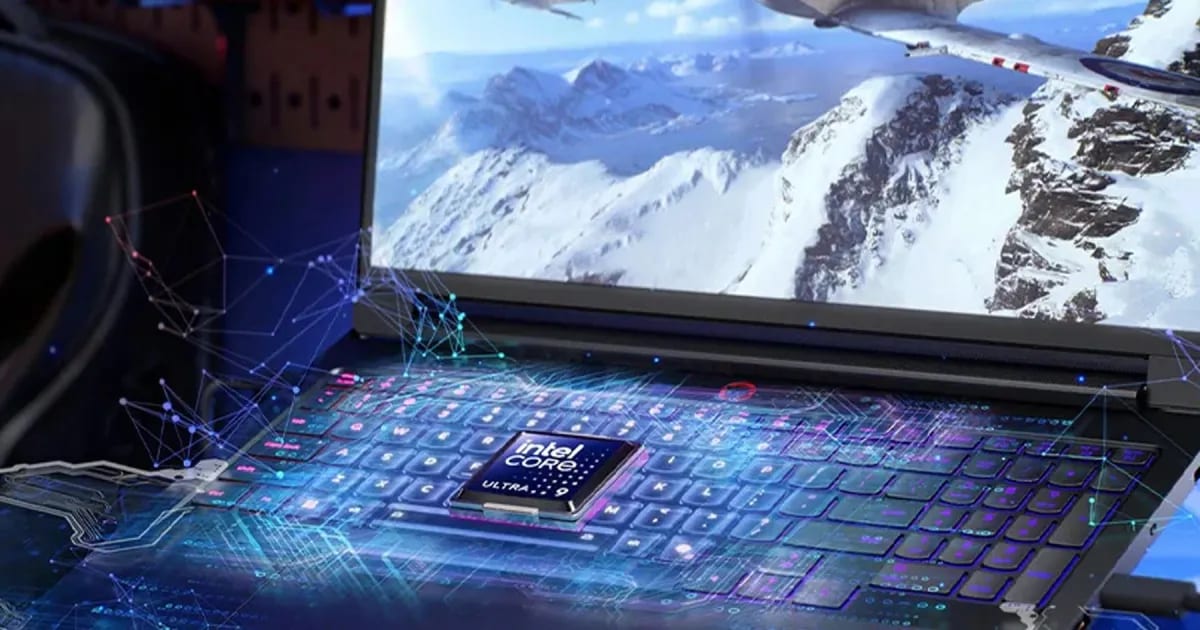
Intel is reportedly planning two new laptop chip families for 2027, called Moon Lake and Wildcat Lake Refresh. The later one to launch may be the weaker one. That could make shopping for a Windows laptop even more confusing than it already is.
What the leaks say
The details come from a hardware leaker known as Jaykihn. Wildcat Lake Refresh could arrive in the second quarter of 2027. Moon Lake is expected to follow in the fourth quarter. Intel has not officially confirmed either schedule.
Two chips, two jobs
Moon Lake is reportedly built for cheap, low-power laptops, including some with no cooling fan. Earlier leaks suggest up to four low-power efficiency cores and no performance cores. Cores are the parts of a chip that do the work. Its rumored 6-watt power rating points to battery life over speed.
Wildcat Lake Refresh is rumored to be considerably stronger. It could have up to four performance cores plus four efficiency cores. That would double the performance cores in the current Wildcat Lake chips.
- Talk of Intel vPro support, which is aimed at business laptops
- Power limits that can be set as high as 35 watts
- An improved 18A-P manufacturing process for the main compute part
- Moon Lake is expected to use the standard 18A process
What else is in the pipeline
Intel is also working on Nova Lake, expected to power its next desktop and high-performance laptop chips. Some desktop versions could have larger caches to compete with AMD's Ryzen X3D processors. Nova Lake-HX is rumored to carry the Core Ultra 4000-series name.
Razor Lake-AX focuses on powerful built-in graphics, but its future in consumer laptops is unclear. Intel could also bring back its older Raptor Lake-HX design under the Core 2000 HX name.
What to do
If these plans hold, the name on the box will say less than what is inside. Before buying a Windows laptop, look up the exact chip. Check how many cores it has and what kind. Also check how much power it is built to use. A name that sounds newer can still be the slower or older design.
The takeawayBefore buying a Windows laptop, check the exact chip inside, because a newer-sounding name may not mean newer or faster technology.