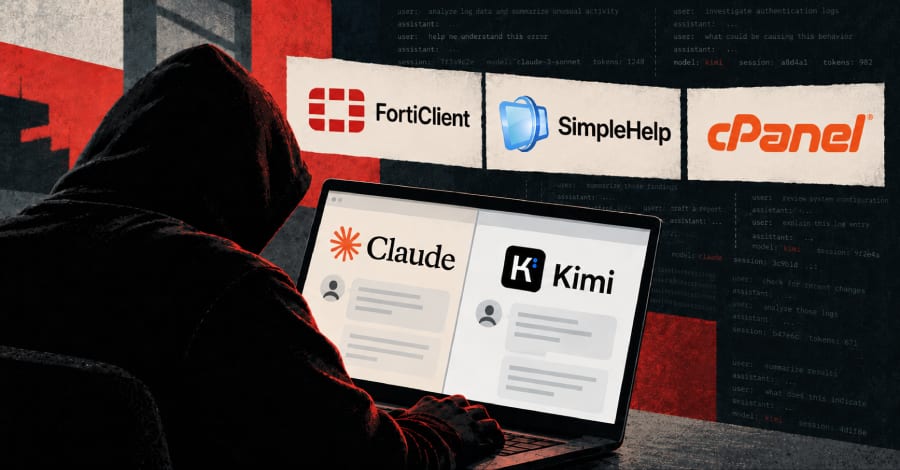
Act this weekWhat happenedRansomware affiliates used AI agents, guided and approved by a human, to break into company networks, steal data and demand payment.
Who is affectedOrganizations using FortiClient EMS, SimpleHelp, cPanel and VPN gateways, mostly industrial, manufacturing, energy and healthcare firms, over half in the U.S.
What to do- 1Install the latest security updates on VPNs, remote-access tools and web hosting controls.
- 2Never reuse passwords across your VPN, servers, backups and security tools, and turn on two-step login.
- 3Keep offline copies of your backups that a hacker with a stolen login cannot erase.
- 4Prepare a plan for extortion calls and threats, including who to contact at your insurer and lawyer.
Ransomware affiliates used AI agents to break into company networks, steal data and demand payment. Security firm SOCRadar found the operation after its servers were left exposed. It was run by affiliates of two ransomware groups, INC and The Gentlemen. Researchers estimate 62 organizations were targeted, and more than half were in the U.S.
What happened
The attackers used a framework called Phantom. A human operator wrote a prompt for each victim and reviewed every step. The AI then carried out the intrusion using commercial AI models. The logs show 8,257 messages across 133 sessions. When a model refused a request, the operator reworded it as an authorized security test instead of switching to another model.
How the attacks worked
The attackers started with software that faces the internet, such as VPN gateways and remote-access tools. A VPN is a private tunnel employees use to reach work systems from outside. The attackers named these targets: FortiClient EMS, SimpleHelp, cPanel and several VPN products. Once inside, they spread through the network and gathered logins.
Reused passwords did the most damage. In one case, a single reused password unlocked the VPN, servers, backup systems and security management tools all at once. The attackers then went after finance, HR, legal and executive files. They also tried to disable security software, though their own logs show mixed results against enterprise-grade protection.
The pressure campaign
The extortion was built around the stolen data. The attackers studied victims' financials to pick a sum they could pay without involving a bank or an insurer. They sent masked proof samples, made scripted phone calls and threatened to notify customers, partners and regulators. Victims had 24 to 72 hours to pay before the data was posted on a leak site. Four organizations ended up listed.
Who it affects
The targets were companies, mostly in industrial, manufacturing and energy, followed by healthcare and pharmaceutical firms. If your business runs any of the named tools, treat this as urgent. Everyday users of a company's services are not the direct targets here. They could still be affected if a company holding their data is breached and its files are published.
What to do
The alert box above lists the steps. The short version is to update remote-access software, stop reusing passwords, protect your backups and plan for an extortion call before one arrives.
What is still unknown
The final outcome of the ransom demands is unclear. Researchers did not recover any cryptocurrency wallet or payment record, so it is not known whether any victim paid. The report also does not say how many of the 62 targets were fully breached rather than only probed.
The takeawayOne reused password can open every door in a company, so give your VPN, servers and backups separate logins and keep remote-access tools updated.