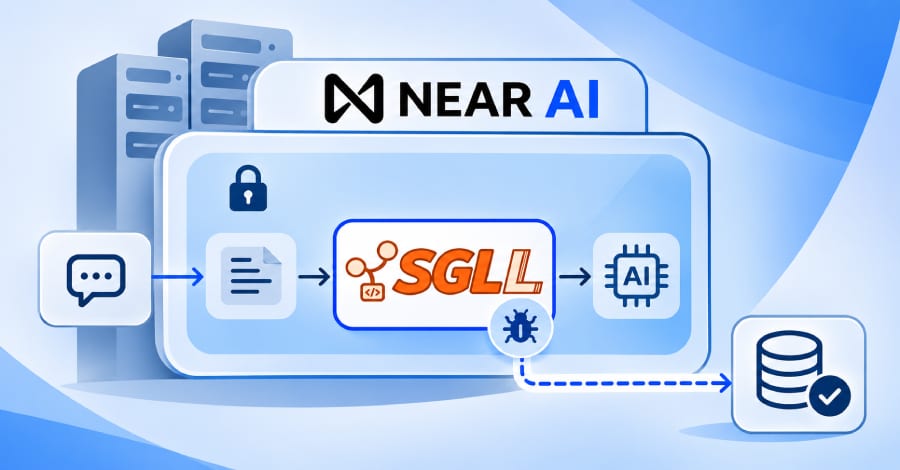
Act this weekWhat happenedAn attacker exploited a flaw in SGLang, an open-source AI tool, to run code on a NEAR AI server and then reach other internal systems.
Who is affectedUsers of NEAR AI's retired Private Chat, owners of 18 agents on an older NEAR AI Agents setup, and two NEAR AI Cloud customers whose keys leaked.
What to do- 1Check your inbox for an email from security@near.ai and follow the steps it gives you.
- 2Ignore unexpected messages about your account or balance, and do not click their links.
- 3If you use NEAR AI Cloud, replace your API keys as a precaution.
- 4If you heard nothing from the company, no action is needed, per its latest post.
An attacker broke into one of NEAR AI's servers last Sunday and later took account details on about 100 users of a retired product. The way in was a flaw in SGLang, an open-source tool that runs AI models and answers requests. The company says the access is now closed.
What happened
NEAR AI offers a confidential mode that handles requests inside a protected area called a trusted execution environment. It is meant to keep requests private, even from the company. But the company said this protection does not cover flaws in the software running inside it. SGLang runs there, so the attacker could reach requests being processed on that server that day, including confidential ones.
The attacker then moved deeper. They reached an internal system behind Private Chat, a product NEAR AI had already deprecated, and downloaded account details.
Who it affects
- About 100 Private Chat users: names and email addresses, plus plan and balance details for some.
- Owners of 18 AI agents on an older setup outside the protected area: chat history, settings and logs were taken.
- Two NEAR AI Cloud customers whose API keys, which work like passwords for software, showed up in logs. Both were revoked.
The company found no sign that stored Private Chat conversations or uploaded files were accessed.
Who can relax
NEAR AI says people it has not contacted do not need to do anything. Those affected got an email from security@near.ai. One gap remains. The company has not said whether people whose requests passed through the affected server last Sunday were told. Brave, the browser maker, said in an October 15 write-up that its Leo assistant runs some chats inside a NEAR AI protected environment. NEAR AI has not said whether the affected server handled any of them.
What to do
The alert box above lists the steps. Beyond those, be wary of any message about your account or balance that you did not ask for. Stolen names and emails are often used to make scam messages look real.
What is still unknown
NEAR AI has not given a CVE number, which is the public ID for a known flaw. It has not named the affected SGLang versions or said whether the SGLang project has released a fix. It did deploy its own fix on all of its inference servers, reset sessions and credentials, and finished a full forensic review. It reported the flaw to the SGLang project.
The takeawayPrivacy modes only protect you as far as the software inside them is secure, so check for the NEAR AI email and be careful what you type into any AI service.