Act this weekWhat happenedU.S. agencies warn that hackers are targeting industrial refrigeration and cold-chain monitoring systems to spoil stock and create fire hazards.
Who is affectedSupermarkets, grocers, butchers, blood and medicine storage, and anyone using systems like Danfoss StoreView or Copeland/Dixell XWEB.
What to do- 1Find out which of your refrigeration controllers can be reached from the internet.
- 2Change any default passwords and turn on strong sign-in.
- 3Install the latest updates, and replace old devices that no longer get them.
- 4Remove remote access you do not need and lock down what you keep.
Hackers are breaking into the control systems behind commercial freezers and coolers and pushing the temperature up. U.S. agencies, including the FBI and CISA, issued a joint warning that the attacks are active and global. The goal appears to be disrupted service, fire hazards and lost inventory.
What happened
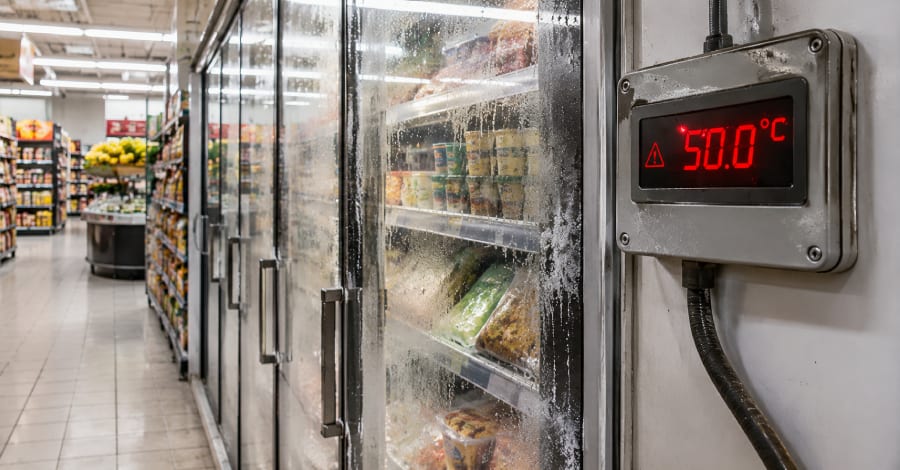
In recent weeks, attackers hit hundreds of supermarkets across Europe. They reached refrigeration controllers that were open to the internet. Some units were heated to as high as 50 degrees Celsius (122 degrees Fahrenheit). Others were forced into defrost mode. Targets ranged from big chains to small grocers and butchers in countries including Belgium, France, Germany, Ireland, Italy and the U.K.
The French Blood Establishment confirmed that an incident at a refrigeration equipment provider pushed temperature and defrost settings to "extremely high levels" at three sites that store blood plasma.
How the attacks work
The agencies say attackers are likely to use three routes: bypassing the login, injecting their own code, and taking advantage of weak setups. Weak setups include unchanged default passwords. The advisory warns that unpatched or internet-accessible controllers can be told to run continuous heating and defrost cycles, which can cause widespread inventory loss and equipment hazards.
Who it affects
Anyone who stores food, medicine or other temperature-sensitive goods with connected controllers should pay attention. That includes supermarkets, grocers, butchers and medical storage. Two products appear in the research: Danfoss StoreView and Copeland/Dixell XWEB. Censys, a firm that tracks devices visible online, counted 708 exposed StoreView systems on November 5, down from 3,004 on October 9. Most are in France. Exposed XWEB systems fell from 3,708 to 2,420.
Those numbers are falling, but hundreds to thousands are still reachable. A controller that cannot be reached from the internet is far less exposed to this kind of attack, so owners with fully local systems have less to worry about.
What to do
The steps in the alert box above cover the basics. Start by asking your refrigeration installer or service provider which of your units connect online, since many owners do not know. The FBI's Brett Leatherman said these systems are being targeted across critical infrastructure sectors, putting inventory and equipment at risk.
What is not known
It is unclear who is behind the attacks. The material does not describe confirmed attacks in the U.S., though Censys says North America accounts for roughly 38% of global exposure of industrial control systems. Censys also links these cases to other recent attacks on gas station tank gauges, air raid systems and water towers.
The takeawayIf your coolers or freezers can be controlled online, find out now who can reach them, change default passwords and install updates.