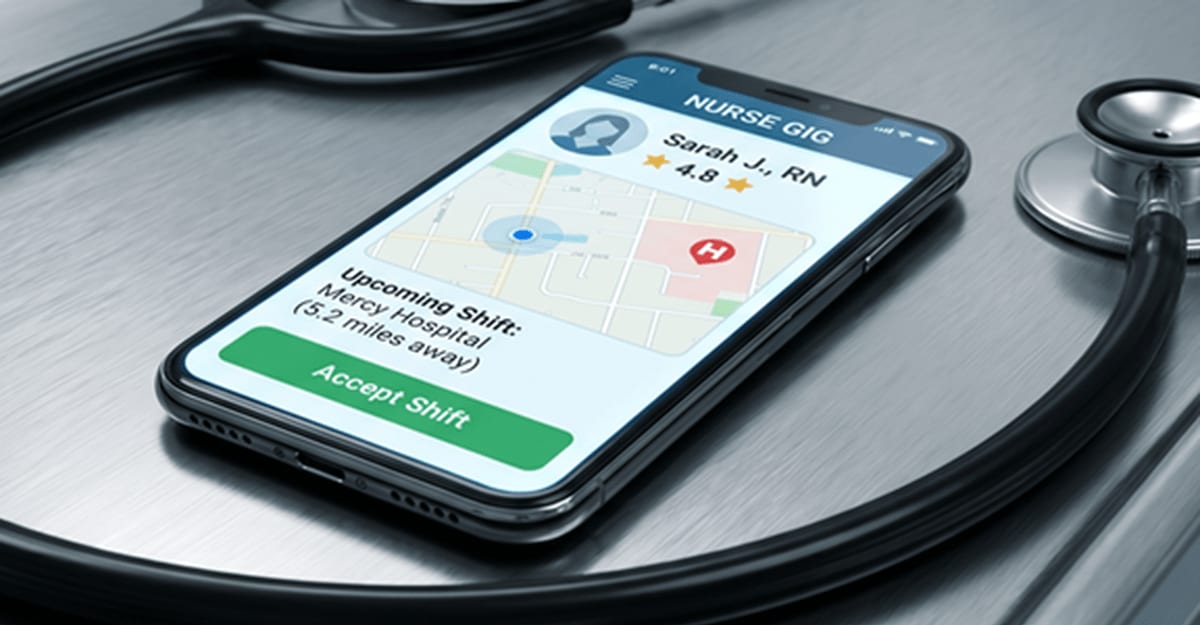
Apps often described as "Uber for nursing" are pushing lawmakers in at least 17 states to loosen the rules that cover hospital and nursing home staffing. That is the finding of a report from the AI Now Institute, released April 21, 2026. If a facility near you fills shifts through one of these apps, the rules being written now could shape who is at the bedside and how they are paid and trained.
How the apps work
Apps such as ShiftKey, Clipboard Health, CareRev and IntelyCare let nurses pick up shifts at hospitals and long-term care facilities. Nurses are rated on performance and often bid against each other. Some platforms run "Quick Bid" auctions, where the lowest rate wins. CareRev's "Smart Rates" tool recommends hourly pay based on market demand and past performance.
The report also raises concern about "surveillance wages." That means platforms may use personal data to set different pay for nurses doing identical work. A companion Roosevelt Institute brief found that some platforms use data brokers to learn nurses' debt levels and offer lower wages to those with the most debt.
What nurses give up
The nurses are classified as independent contractors. According to the report, that leaves them without minimum wage protections, overtime, workers' compensation or unemployment insurance. Nurses also report arriving at facilities with no paid training or orientation. They say canceled shifts and poor ratings can permanently hurt their access to future work.
The lobbying push
- Since 2022, bills in at least 17 states would carve gig apps out of staffing agency rules.
- Eight states have advanced exemption bills, including Colorado, Illinois, Iowa and Nevada.
- Clipboard Health and ShiftKey have spent more than $1.1 million combined on federal lobbying.
- The ten biggest gig nursing platforms have raised roughly $1.4 billion.
New York chose a different path
In 2025, New York treated gig nursing platforms as healthcare staffing agencies. That means annual registration, quarterly wage reporting and no independent contractor status for nurses. According to the report, Clipboard Health, Nursa and KARE stopped operating in the state afterward.
What happens next
Bills remain active in Colorado, Illinois, Iowa, Wisconsin and other states. The central question is whether gig nurses count as employees or contractors. That affects pay, safety and who is accountable when something goes wrong. Facilities already spend heavily on the apps. One Colorado nursing home spent $2.9 million in 2022, and a Chicago hospital spends $2.7 million a year. The material here does not include any response from the companies.
The takeawayWhether app-staffed nurses count as employees or contractors is being decided in state legislatures now, and it shapes pay, training and accountability.