Act this weekWhat happenedScammers run fake gift card giveaways that push people through a fake verification step into paid subscriptions and offers, and no reward is ever given.
Who is affectedAnyone on social media who sees ads for free gift cards from brands like PlayStation, Sephora, SHEIN, Walmart and Amazon, plus the brands being imitated.
What to do- 1Skip any ad offering a free gift card, especially one using a celebrity.
- 2Never enter your phone number or a text message PIN to unlock a reward.
- 3Check your mobile bill for charges you do not recognize and ask your carrier to cancel them.
- 4Report the ad to the social platform and warn family members who use it.
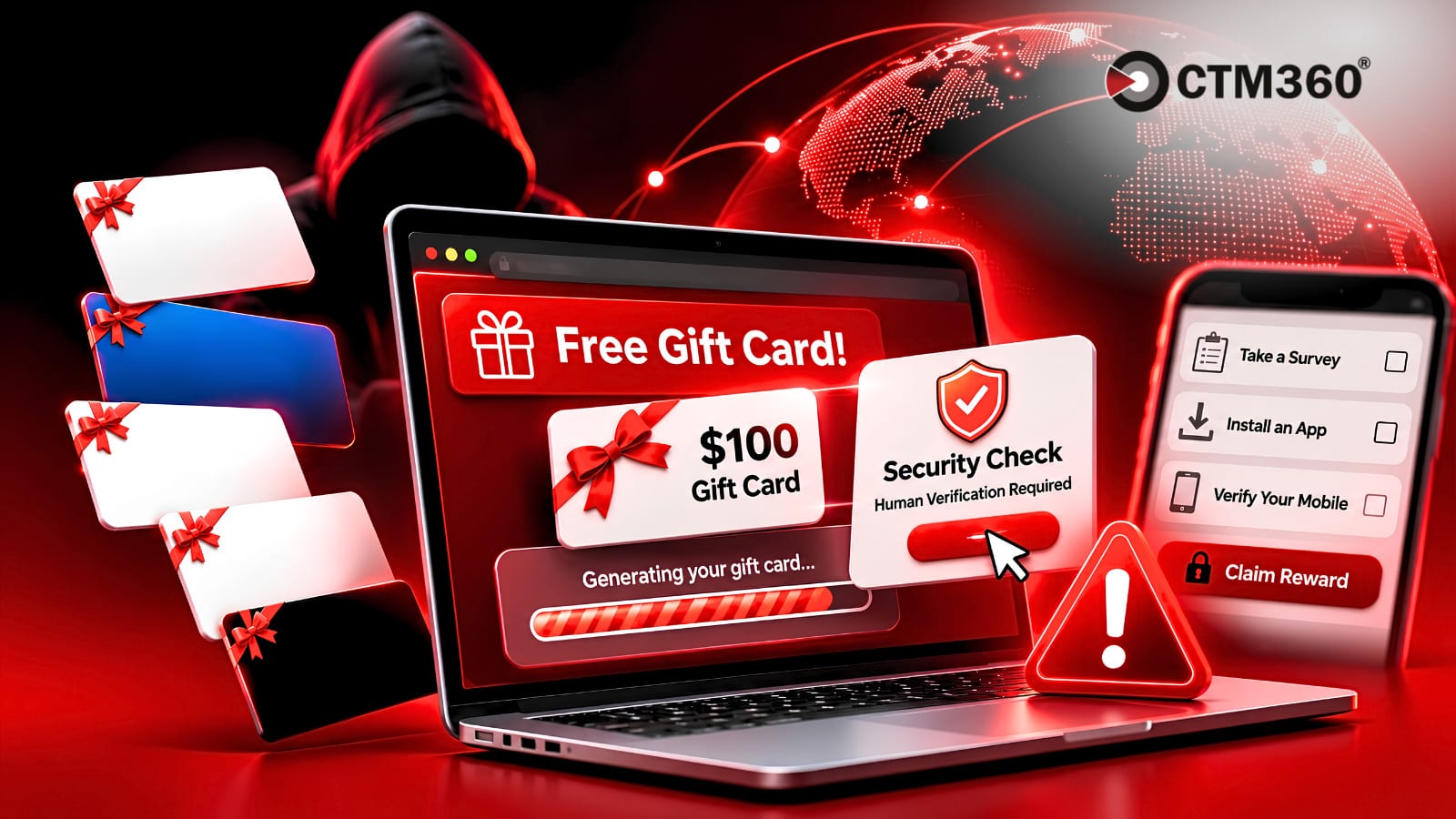
That free gift card ad with a celebrity in it is not a giveaway. Security firm CTM360 has linked more than 1,000 incidents to one recurring campaign that uses big brand names to lure people in. In every test CTM360 ran, no gift card was ever delivered. The real goal is to get you signed up for paid subscriptions.
How the scam works
It starts with an ad that uses a well-known brand, often with a celebrity. CTM360 saw PlayStation, Sephora, SHEIN, Walmart and Amazon imitated. Click, and you land on a fake reward site. You pick a gift card amount, watch a progress bar pretend to build your card, and see a partly hidden code that makes it look real.
Then comes a "human verification" step. It is not a security check. It sends you to outside offers and tasks. If you finish one, the site says the step is incomplete and sends you to another. The loop never ends in a gift card.
Why it matters
This is not mainly about stealing passwords. CTM360 describes a volume model. The links carry tracking codes that tie each sign-up to the scammer's affiliate account, which is a partner account that pays out per sign-up. When someone submits a mobile number and enters the PIN sent by text for a subscription, the scammer earns a commission.
For you, that can mean surprise charges on your mobile bill, personal information in the wrong hands and more spam. CTM360 also notes the damage to the brands being imitated, whose names are used without permission.
Who is affected
Anyone who sees these ads on social media can be targeted. The setup is modular, so the scammers can swap the brand, the celebrity and the web address without rebuilding the scam. That makes the ads easy to refresh and hard to spot by name alone.
Based on how the scam earns money, the costly moment comes when a phone number and text PIN are entered. Someone who only saw an ad has little to worry about. Someone who typed in a number deserves a closer look at their bill.
What to do
The alert box above lists the steps. The short version: skip these offers, keep your number and PIN to yourself, check your bill and warn family.
What is not known
The material does not say how many people were charged or how much money was lost. It also does not say who is behind the campaign.
The takeawayA free gift card ad is bait. Never enter your phone number or a text PIN to unlock a reward, and check your mobile bill if you did.