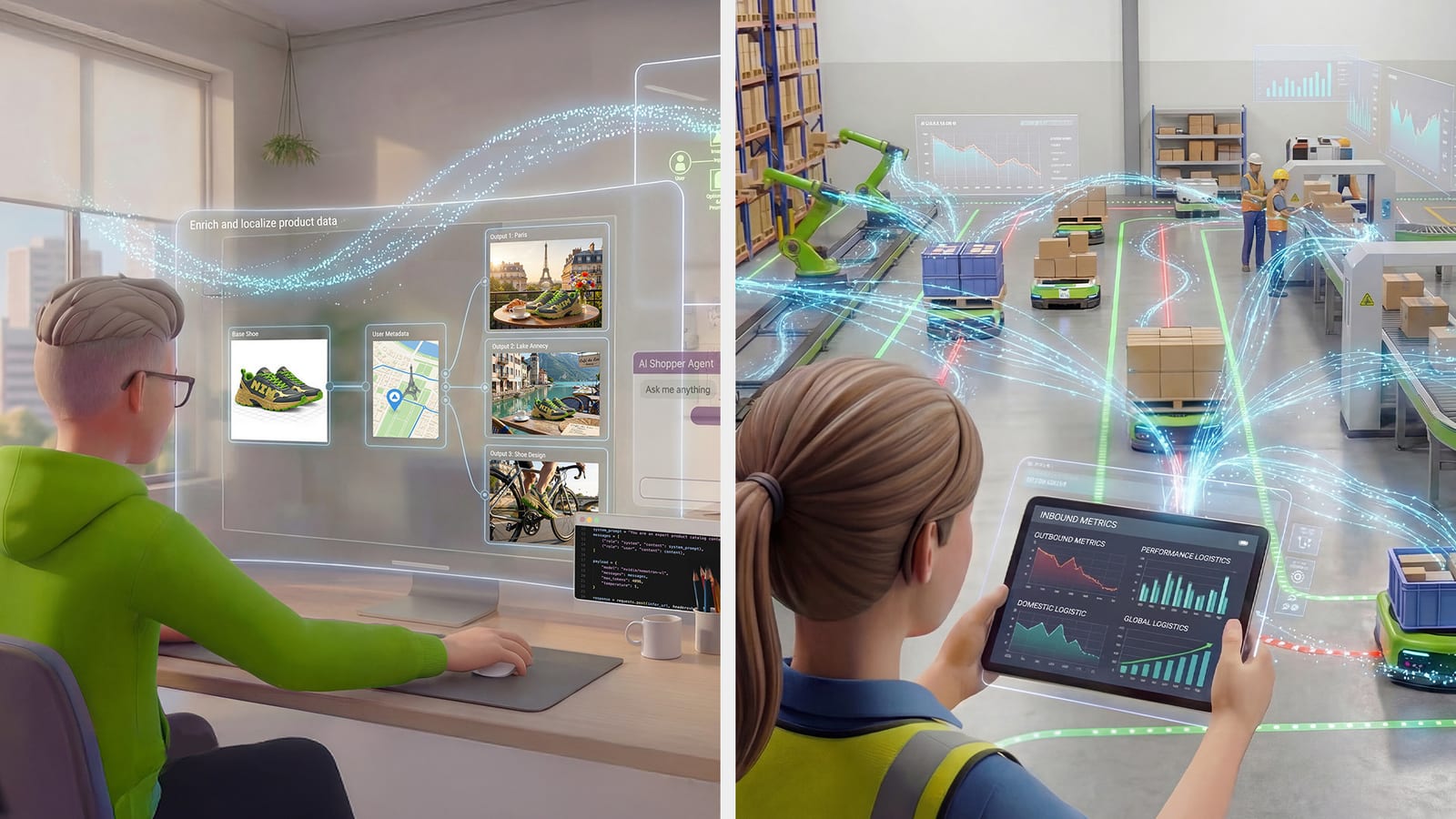
Several European retailers say AI is cutting their costs and helping them sell more. Shopify reports a 90% drop in the cost of running one of its AI tools. Otto Group can now test warehouse changes in a computer simulation before touching the real building. The examples come from a blog post by NVIDIA, which supplies much of the technology behind them.
Cheaper AI for online stores
Shopify retrained an open AI model for part of Sidekick, its AI assistant for merchants. That part pulls store data so Sidekick can suggest ways to improve a shop. On Shopify's internal test, the retrained model beat a leading top-tier model on accuracy. It also cost 90% less to run and answered 7x faster.
Shopify also reports up to 12x lower running costs across five other uses, such as sorting products into categories and recommending items to buyers. Zooplus, a European online pet retailer, built a prototype search tool that reached 86% search accuracy. Mirakl says its catalog tool has organized more than 70 million products from messy vendor data.
Better photos and product pages
Photoroom's tool now standardizes the main photo on every Vestiaire Collective listing, about 40,000 a day across 70 countries. Listings processed this way sold at a 5% higher rate and got 3% to 7% more unique views per product page.
Omi launched ProductDrop, which ties every AI-generated image to an approved digital twin, meaning a virtual copy of the real product. The aim is to make lots of marketing images without getting the product wrong. L'Oréal is using the approach.
Testing before building
Otto Group, with Reply, extended its simulation system to Haldensleben, Germany, its largest fulfillment center. Logistics teams can design, test and improve warehouse operations in simulation before anything changes on the floor.
ALLSIDES turns physical objects into detailed 3D digital twins in minutes. These can be used to simulate whole store layouts. It says its clients include adidas, Amazon, Nike, Zalando and Zara. CATCHES reports that its virtual try-on tool, used with the brand AMIRI, lifted conversion by 55%, add-to-cart by 80% and gross sales by 56%.
What to keep in mind
These figures are company reports published on NVIDIA's own blog. Shopify's results come from its internal benchmark, not an outside test. The post does not say what any of these tools cost or when smaller shops could use them.
- Cheaper AI could make smarter store tools affordable for smaller sellers.
- Cleaner product photos may help listings get seen and sold.
- Virtual try-on and simulation aim to cut guesswork before money is spent.
The takeawayRetailers report real gains from AI in search, photos and warehouse planning, but the numbers are self-reported and pricing for small sellers is unknown.