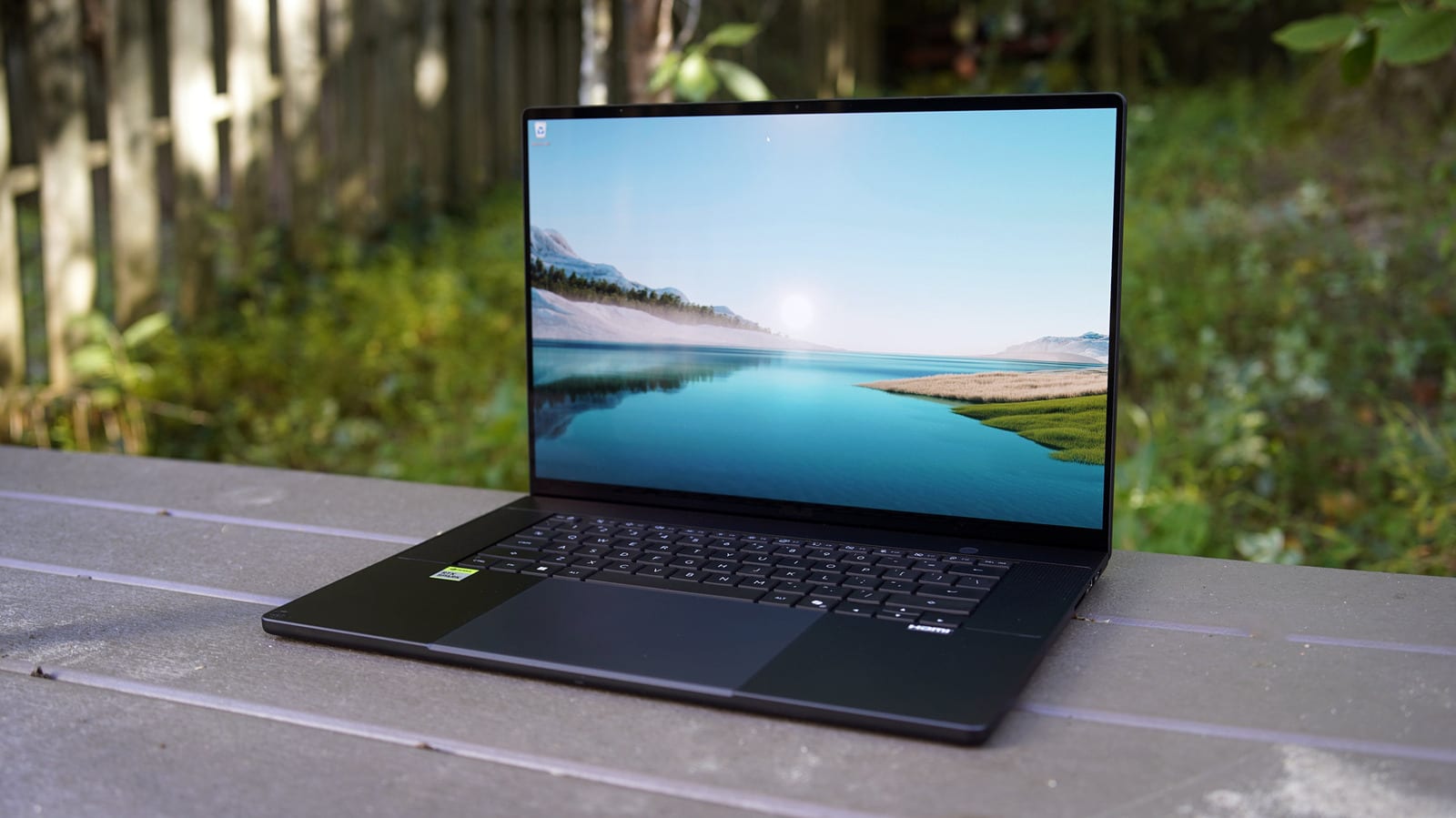
ASUS has released the first laptop built on NVIDIA's new RTX Spark chip, and Engadget gave it 8.7 out of 10. The ProArt P16 starts at $2,800. The review model, loaded with 128GB of memory, costs $7,000. The reviewer's verdict is that it is a very good laptop, but mostly for people who run AI tools locally.
What it is
RTX Spark is a single chip that combines a 20-core Arm processor, a modern Blackwell graphics unit and up to 128GB of shared memory. Arm is a different chip design from the Intel and AMD processors in most Windows laptops. Shared memory means the processor and graphics unit draw from one big pool. Apple's M-series chips work in a similar way.
The P16 has a 16-inch OLED screen, an aluminum case and a large touchpad. It weighs 3.9 pounds, lighter than the 16-inch MacBook Pro at 4.7 pounds. Ports include three USB-C, USB Type A, HDMI, a headphone jack and a full-size SD card reader. There is no Ethernet port.
How it performed
The strongest results came from graphics and AI tests. In one graphics test, the P16 scored 4,700 points higher than a MacBook Pro with an M5 Max chip. In an AI image generation test it scored 1,519, about 600 points above Apple's laptop.
It also ran a 27-billion-parameter Qwen3.8 AI model, which alone takes 42GB of memory, and still had plenty of memory left for other work. In games, Control Resonant ran at 70 frames per second at 1440p with ultra settings, ray tracing on medium and 4x frame generation. Lower settings reached 120. The fans were loud.
The processor was less impressive. It trailed an ASUS laptop with a Qualcomm Snapdragon X2 Elite chip in some everyday tests.
The downsides
- Price: $2,800 to start, rising fast as memory is added.
- Some games and software may have compatibility problems.
- The case attracts fingerprints.
- Gaming laptops cost far less for similar play.
The review also notes that RTX Spark is unlikely to ease high PC prices. It needs a lot of memory, and AI demand has already pushed memory costs up.
Who it is for
RTX Spark will not replace Intel and AMD chips. The reviewer describes it as a new branch of PC design aimed at AI researchers and enthusiasts. It is meant to sit alongside Qualcomm's Snapdragon X chips, which cover entry-level and midrange laptops.
If you mainly browse, email and stream, this laptop is not for you. If you want to run AI models privately on your own machine, it is one of the first laptops built for that. The reviewer also expects competition from NVIDIA to push AMD, Intel and Qualcomm to improve.
The takeawayThe ProArt P16 is a fast, polished laptop for running AI locally, but at $2,800 and up, most people can skip it.