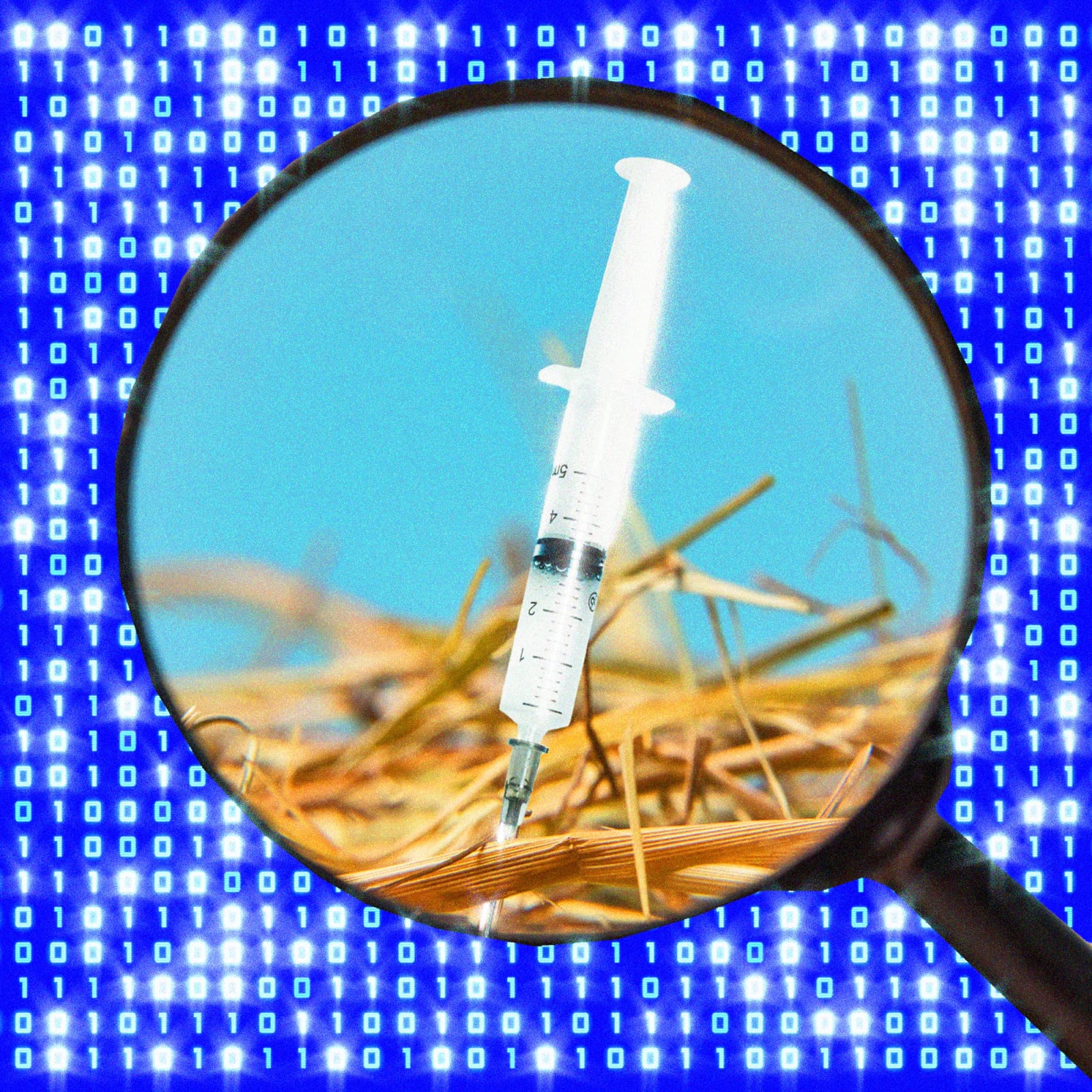
A new startup called Potential Sciences launched on November 5 with a plan to speed up the hunt for new drugs. Instead of leaning only on slow lab experiments, it wants to train AI on chemistry that a computer simulates. It has seed funding in the tens of millions of dollars, and the UK government is one of its backers.
What the company is doing
Drug makers start by looking for molecules that might treat a disease. Most fail. Potential Sciences wants to weed out the likely failures early. Its method uses basic physics to simulate how atoms interact, then small molecules, then larger building blocks of proteins. The simulated results become training data for AI that predicts how a drug candidate will behave in the body.
Founder and CEO Hatem Helal told Wired the goal is for molecules that will never work in the clinic to fail fast.
Why simulated data
Many AI drug labs build on one public collection of 3D atomic structures, the Protein Data Bank. Researchers have added to it for decades through real experiments. Helal says it is still too small to train AI that can reliably speed up the search. Simulation could produce far more data.
If it works, the cost of testing ideas drops. Helal says that could make it affordable to pursue drugs for rare conditions that have gone untreated.
Who is backing it
The investors include SovAI, the UK government's AI venture fund, and Twin Path Ventures. The founders did not disclose the exact amount or the company's valuation. SovAI was set up earlier this year and has roughly $800 million. It can also give its companies access to the UK's national AI supercomputer. A SovAI executive, Joséphine Kant, has joined the startup's board.
Reasons for caution
Experts see promise but not proof. Alan Fersht, an emeritus chemistry professor at the University of Cambridge, said he is optimistic that accurate simulation will eventually happen. Peter Wolynes, a chemistry professor at Rice University, expects an improvement. But he said protein engineering today is at the level of the Romans, not the Renaissance.
Even a better way to find candidates does not remove safety and effectiveness testing. Wolynes noted that designing a drug costs little next to learning what it does in mice, sick patients and healthy people. The field is also crowded.
There is a darker side too. Helal acknowledged that tools able to minimize a molecule's toxicity could also be flipped to maximize it.
What is not known yet
- Whether the simulations can predict drug behavior as accurately as hoped.
- How much money was raised and what the company is worth.
- How the company will earn revenue from its technology.
The takeawayAI-designed medicines are still a bet, and even faster discovery will not shorten the years of safety testing before a drug reaches patients.