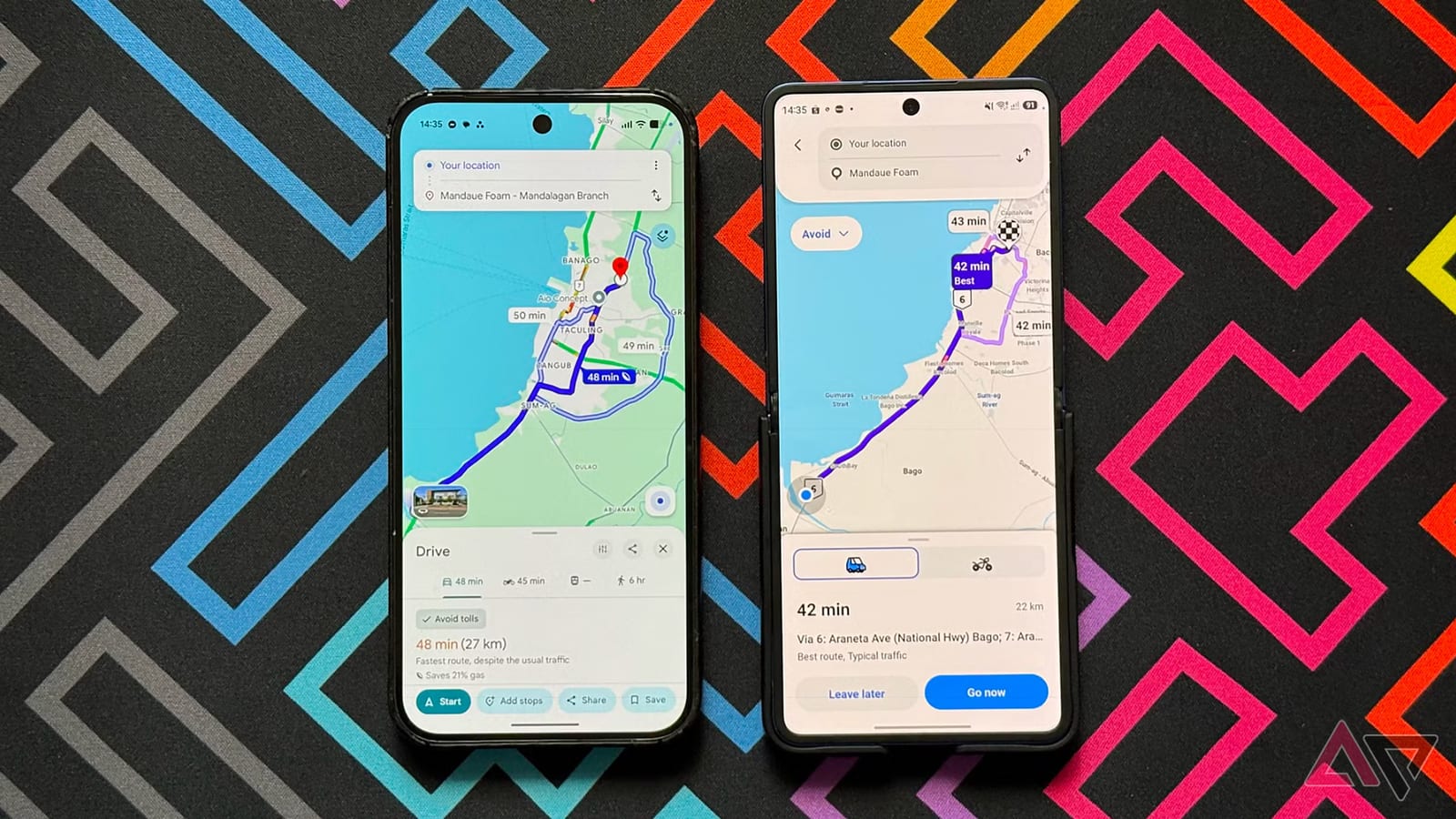
A writer at Android Police swapped Google Maps for Waze for a month and ended up switching back. Anu Joy, who has used Google Maps for years, says Waze has real strengths for drivers. But relying on it for everything exposed gaps that Google Maps quietly covers.
Why the switch looked smart
Waze is known for beating traffic in real time. Its users report speed traps, accidents, stalled vehicles and road closures, and those reports can arrive faster than official data. Its alerts are loud and frequent. The writer also liked the idea of choosing something more focused than the default app. Google owns both apps, which the writer calls ironic.
Where Waze came out ahead
The writer says Waze's speed camera alerts, accident reports and hazard warnings arrived faster than anything seen in Google Maps. Its traffic awareness still felt unmatched in some situations, especially at peak commute hours. The crowdsourced approach works best for drivers who take the same routes every day and want the quickest way through congestion.
Where it fell short
- Offline: Waze keeps routes for a short time, but it falls apart if you leave the planned path or search for something new.
- Weak signal: rerouting became unreliable in parking garages, basements and highways on the edge of the city.
- Walking and transit: Waze is built for cars, so comparing walking, train and driving times meant opening another app.
- History: Waze shows recent drives, but older data fades. It has no long-term record across types of travel.
Google Maps handles these better, according to the writer. It lets you download entire cities and still get turn-by-turn directions without a data connection. Its map also shows lane markings, building outlines, footpaths, entrances and service roads. Waze's map felt sparser, because it is designed around speed alerts and traffic flow.
The Timeline catch
Google Maps Timeline keeps a record of where you went, how long you stayed and how you got there, including walking, driving, public transport and flights. The writer could look back at a random day three months earlier. There is a catch. Timeline deletes data automatically after three months by default. Keeping it longer means changing that setting.
Which app to use
The writer does not call Waze a bad app. Parts of it are excellent. If you mostly drive the same commute, it may save you time. If your day includes walking, trains, spotty reception or last-minute changes, Google Maps is the safer main app. The writer's verdict is that Maps is better for planning, switching travel modes, going offline and understanding a route.
The takeawayWaze can help a daily driver on a fixed commute, but Google Maps is the safer main app if you walk, ride trains or lose signal.